
Travertine is a premium natural stone that has been used for centuries in architecture and interior design and is now experiencing a renaissance in modern design. Thanks to its natural porous structure, warm colour tones and versatile applications, travertine is ideal for renovations, bespoke furniture and sophisticated projects by architects and interior designers. The stone combines timeless aesthetics with sustainable material quality.
What is Travertine?
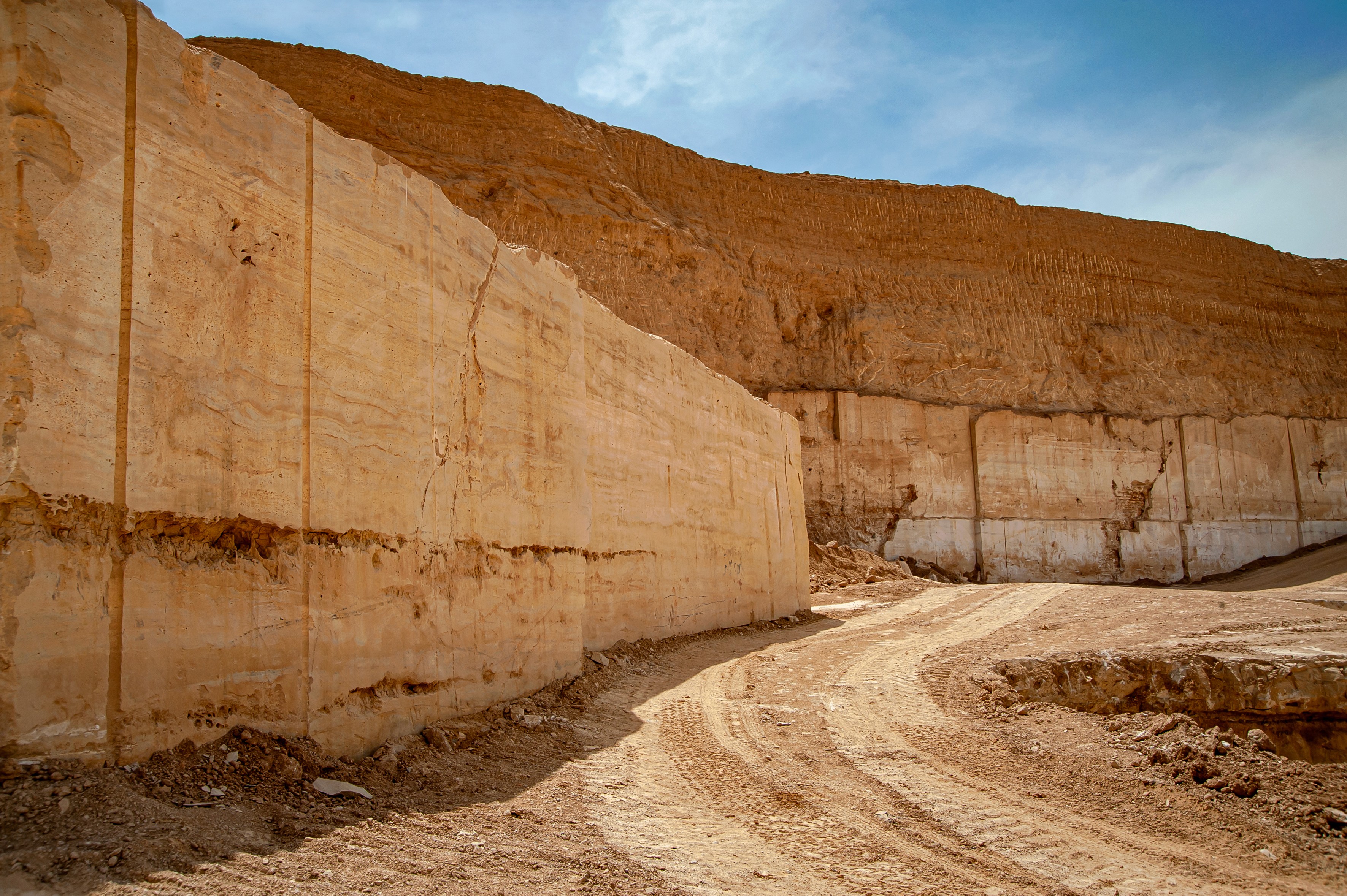
Travertine is a natural stone primarily composed of calcium carbonate (CaCO₃) and belongs to the limestone family. It is valued in architecture and interior design for its distinctive texture, durability and warm, natural appearance.
Formation of Travertine
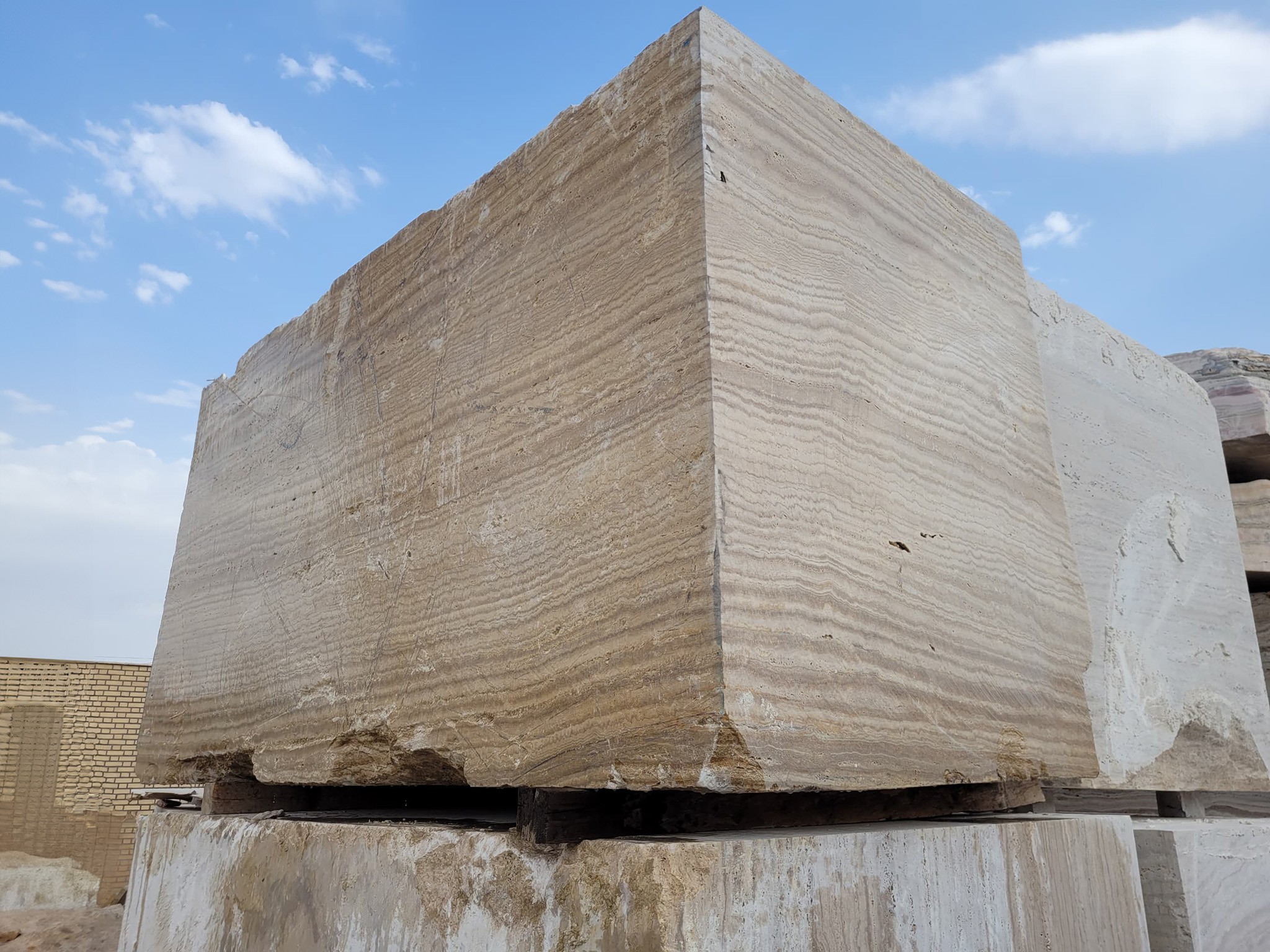
Travertine consists mainly of the mineral calcite, a crystalline form of calcium carbonate. It forms when mineral-rich spring or thermal water reaches the earth’s surface and releases carbon dioxide. As the carbon dioxide escapes, calcium carbonate precipitates and gradually deposits in layers. Over thousands of years, this natural process creates the characteristic travertine stone with its porous structure and vibrant texture.
Depending on its geographical origin, travertine may also contain small amounts of additional minerals such as aragonite, quartz, clay minerals or iron oxides. These natural inclusions give travertine its warm colour variations — ranging from light beige and cream to golden and subtly reddish tones — making each slab a unique and authentic natural product.
How to Distinguish Travertine from Marble, Granite and Onyx
Travertine can be recognised by its open-pored structure and soft, typically beige to earthy colour tones. Its small cavities and natural linear patterns give the stone a Mediterranean, timeless character. The surface often appears warm, textured and organic, making travertine particularly popular in architecture and interior design projects that aim to create a calm and harmonious atmosphere.
Marble has a closed, smooth surface with distinctive veining. Its structure is formed through metamorphic processes, resulting in a denser and more homogeneous appearance compared to travertine. Marble often appears more elegant and contrasting, with pronounced veins in white, grey or darker tones.
Granite is significantly harder and features a granular structure. Its surface shows visible mineral crystals and typically has a speckled appearance in grey, black or various colour tones. Granite feels more compact, technical and highly resistant, making it ideal for heavy-use areas such as kitchen countertops.
Onyx stands out primarily because of its translucency. This natural stone allows light to pass through, creating a glowing effect. Onyx is characterised by intense, cloud-like patterns and dramatic colour gradients, making it ideal for decorative statement elements and backlit applications.
Compared to marble, granite and onyx, travertine appears more natural, softer and warmer. It is the preferred choice when the goal is to create a timeless, balanced and inviting atmosphere in both residential and commercial spaces.
What Are the Key Characteristics of Travertine?
The popularity of travertine is based on its natural appearance, pleasant tactile quality and exceptional versatility for both indoor and outdoor use. This natural stone combines timeless aesthetics with everyday practicality, making it suitable for private homes as well as sophisticated architectural and interior design projects.
Natural Pores and Unique Structure
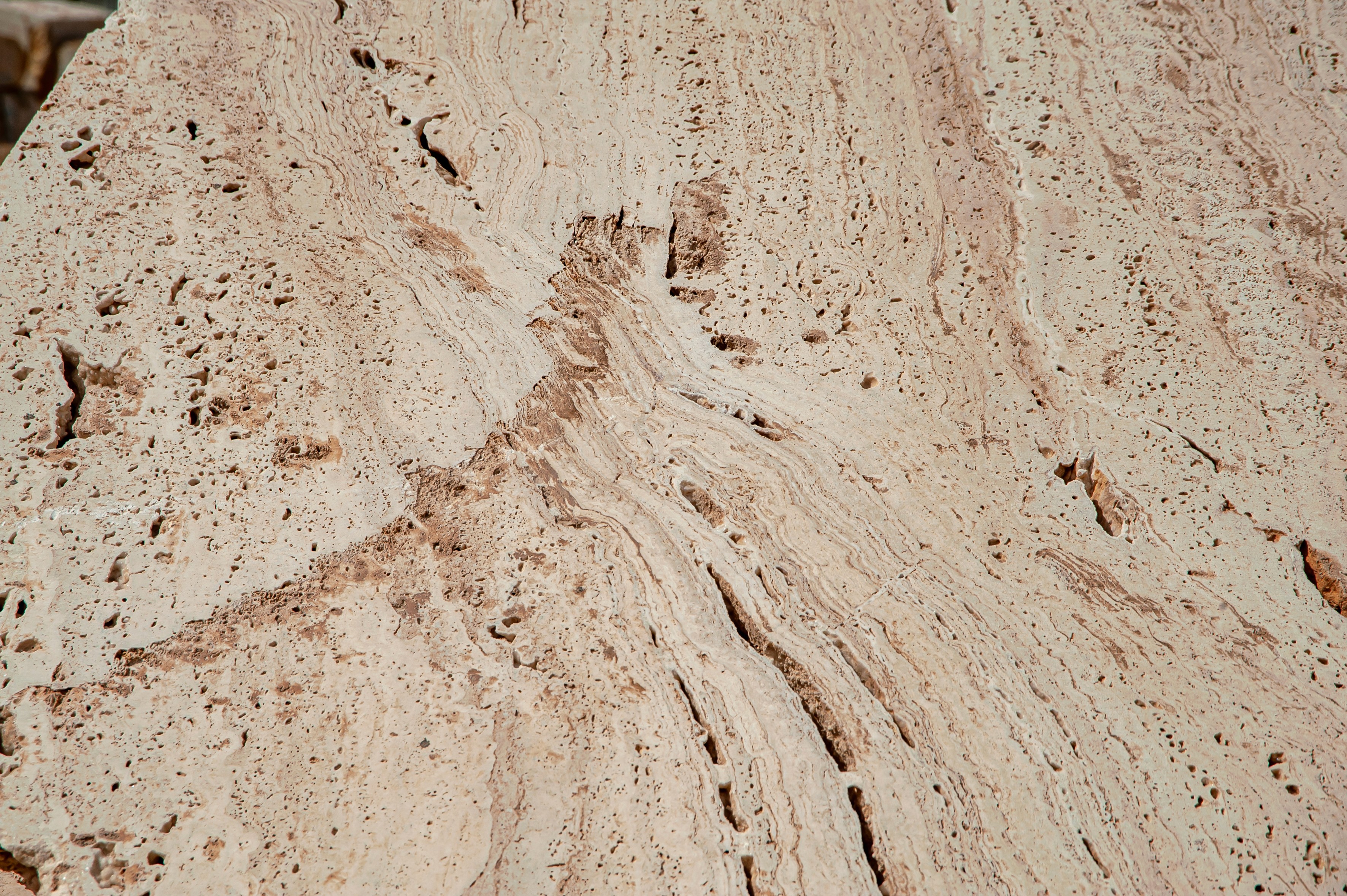
A defining characteristic of travertine is its fine pores and organically formed structures created during its natural formation process. As a result, each slab features a unique surface with a vibrant, authentic character — no two pieces are identical. This natural texture gives the stone depth and individuality, making it especially popular for high-end interiors, bespoke furniture and architectural concepts.
Warm and Inviting Appearance
With its soft beige, cream and earthy tones, travertine creates a calm and welcoming atmosphere. The stone introduces natural elegance and a subtle Mediterranean character into interiors. It is therefore frequently used in living spaces, kitchens and bathrooms where a timeless and harmonious design is desired.
Comfortable Underfoot
As a flooring material, travertine offers a pleasant and natural feel. The surface does not feel cold or artificial, providing a comfortable walking experience. Travertine is also highly compatible with underfloor heating systems, making it an ideal choice for residential areas, bathrooms and open-plan living spaces focused on comfort.
Durable and Suitable for Everyday Use
When professionally processed and regularly sealed, travertine is a long-lasting and low-maintenance natural stone suitable for daily use. It performs well in interior spaces and — when frost-resistant material is selected and properly installed — also in outdoor applications. Depending on the surface finish, travertine can offer good slip resistance, making it safe for high-traffic areas. Over time, minor signs of use enhance the natural character of the material, allowing surfaces to age gracefully and authentically.
Colours, Patterns and Travertine Variations
Travertine captivates with a wide spectrum of natural colours and patterns that give every space a distinctive character. Depending on its origin and geological formation, its colour range extends from light cream and classic beige tones to elegant silver-grey variations and warm earthy shades such as gold, orange or subtle reddish nuances. This natural diversity allows for both calm, minimalist design concepts and expressive architectural accents.
The specific colour and structure of each travertine slab are largely influenced by its mineral composition and the environmental conditions in which it formed. Variations in mineral content, water flow and deposition processes create characteristic layers, cloud-like movements or linear patterns that give the stone visual depth and movement. As a result, different travertine types can appear either homogeneous and subtle or bold and structurally pronounced.
It is precisely this natural formation process that makes travertine a truly unique material. Every slab features an individual veining pattern and surface texture that cannot be replicated. For architectural, interior and bespoke furniture projects, this means that each finished element carries its own material identity — giving spaces an authentic and unmistakable character.
Our Exclusive Travertine Colour Selection
Classic Red V.C
Classic Red Travertine features warm reddish-orange tones combined with a lively, natural structure. Its expressive character makes it ideal for statement surfaces, feature walls and distinctive architectural elements.

Silver Brown V.C
Silver Brown Travertine blends elegant silver-grey tones with warm brown nuances, creating a balanced and modern material aesthetic. This versatile variation works beautifully in both contemporary and timeless interiors.

Titanium V.C
Titanium Travertine stands out with deeper grey and anthracite shades, offering a bold and modern presence. Its strong colour depth makes it particularly suitable for minimalist architecture and high-contrast design concepts.

Dark Beige C.C
Dark Beige Travertine presents warm, earthy beige tones with a calm and refined structure. It embodies natural elegance and is ideal for harmonious, timeless interior designs.
Classic Cream V.C
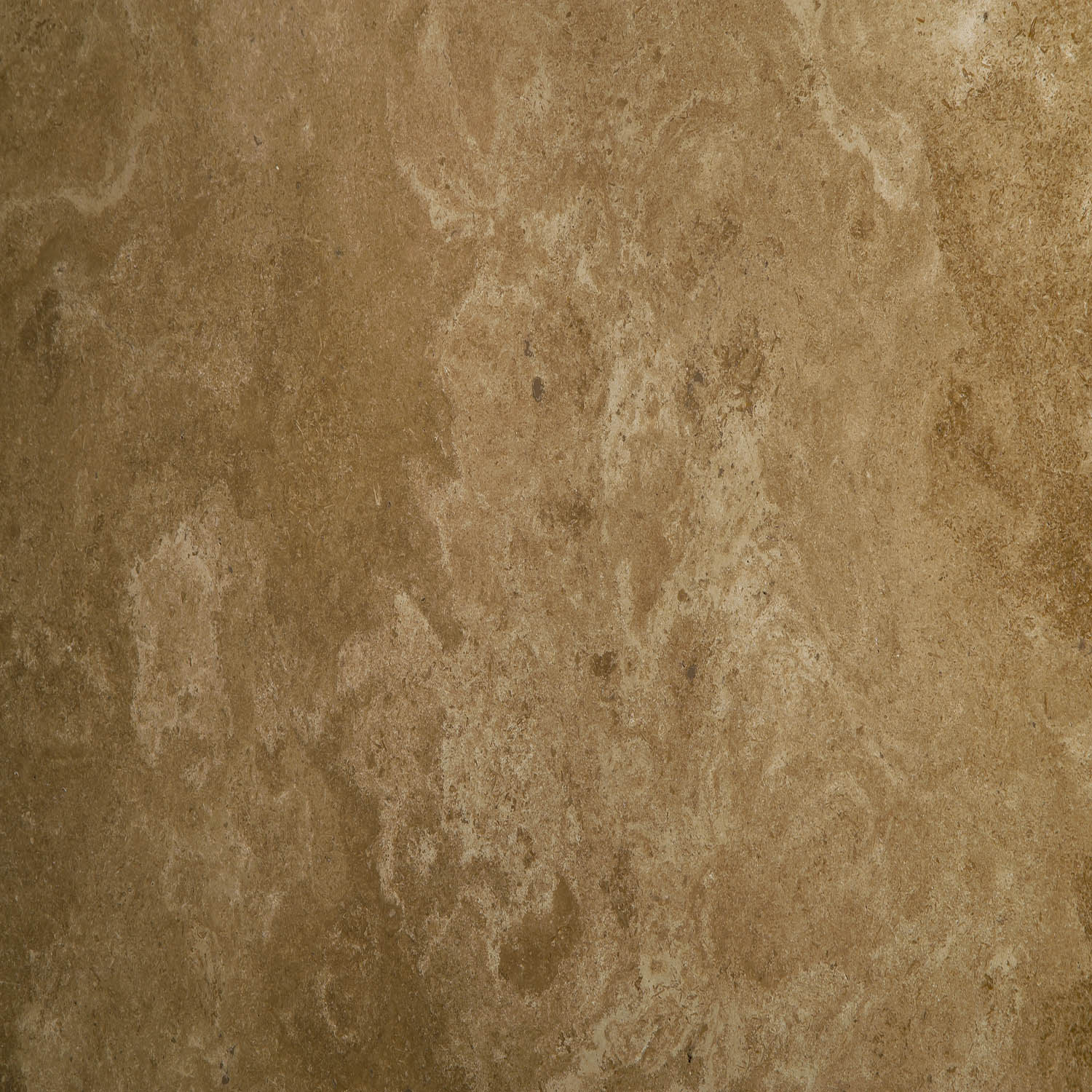
Classic Cream Travertine represents soft, light cream tones and a sophisticated, timeless appearance. This variation enhances brightness and creates an inviting, elegant atmosphere.
Walnut V.C
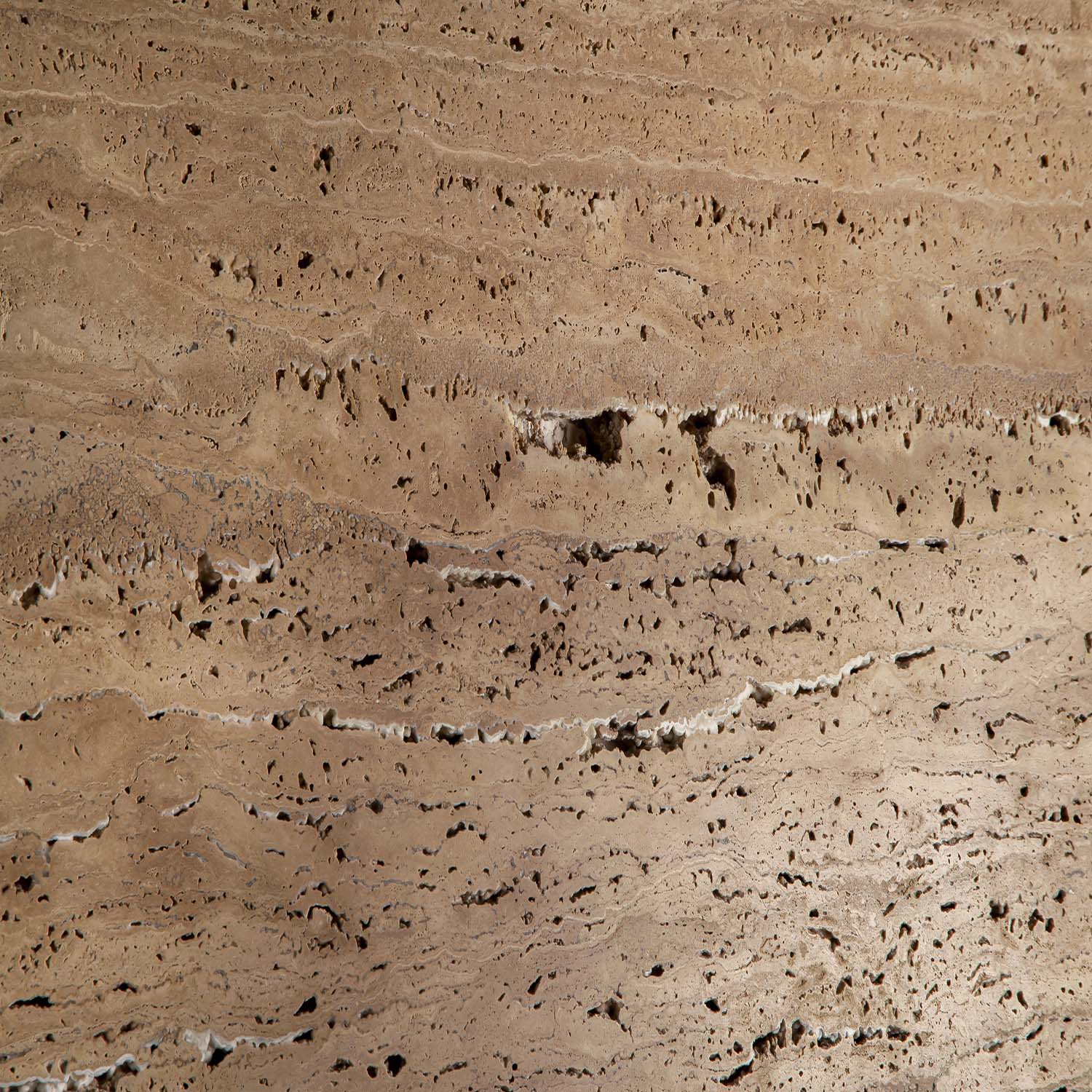
Walnut Travertine is characterised by deep brown tones and natural layering reminiscent of warm wood textures. It adds depth and warmth to residential and architectural spaces.

Classic Light Cream V.C
Classic Light Cream Travertine is one of the lightest travertine variations, conveying a fresh, airy and welcoming ambience. It is particularly suitable for bright, minimalist interiors.

Classic Silver V.C
Classic Silver Travertine features cool silver-grey tones combined with a refined linear structure. Its subtle yet elegant character makes it ideal for modern architectural and interior design applications.

Applications of Travertine
Thanks to its versatility, travertine can be used stylishly and functionally in numerous interior and exterior spaces. This natural stone combines aesthetic quality with practical everyday durability, making it suitable for private renovation projects as well as sophisticated architectural and interior design concepts. Through various surface finishes and formats, travertine can be individually adapted to different applications — from large-scale floor and wall designs to bespoke furniture and architectural elements for both indoor and outdoor use.
Travertine for interior use
In interior applications, travertine impresses with its quiet elegance and its ability to create harmonious, natural-looking spaces. The warm tones and organically formed structure of this natural stone establish a timeless atmosphere that integrates seamlessly into both modern and classic design concepts.
Flooring for Living and Bedrooms
As a flooring material, travertine creates a warm and natural spatial effect. Thanks to its porous structure and thermal conductivity, it is particularly well suited for use with underfloor heating systems, providing both comfort and aesthetic appeal in living rooms and bedrooms.
Wall Cladding and Feature Surfaces
Travertine wall cladding adds depth and natural warmth to interior spaces. Whether used as a full wall application or as a feature surface, it creates a calm, refined and high-quality ambience that enhances residential and architectural environments.
Stairs, Window Sills and Architectural Details
Travertine is ideal for stairs, window sills and architectural elements, as it allows for seamless material transitions and a cohesive overall design. Using the same natural stone across multiple surfaces ensures visual harmony and a balanced interior concept.
Travertine in Kitchens and Bathrooms
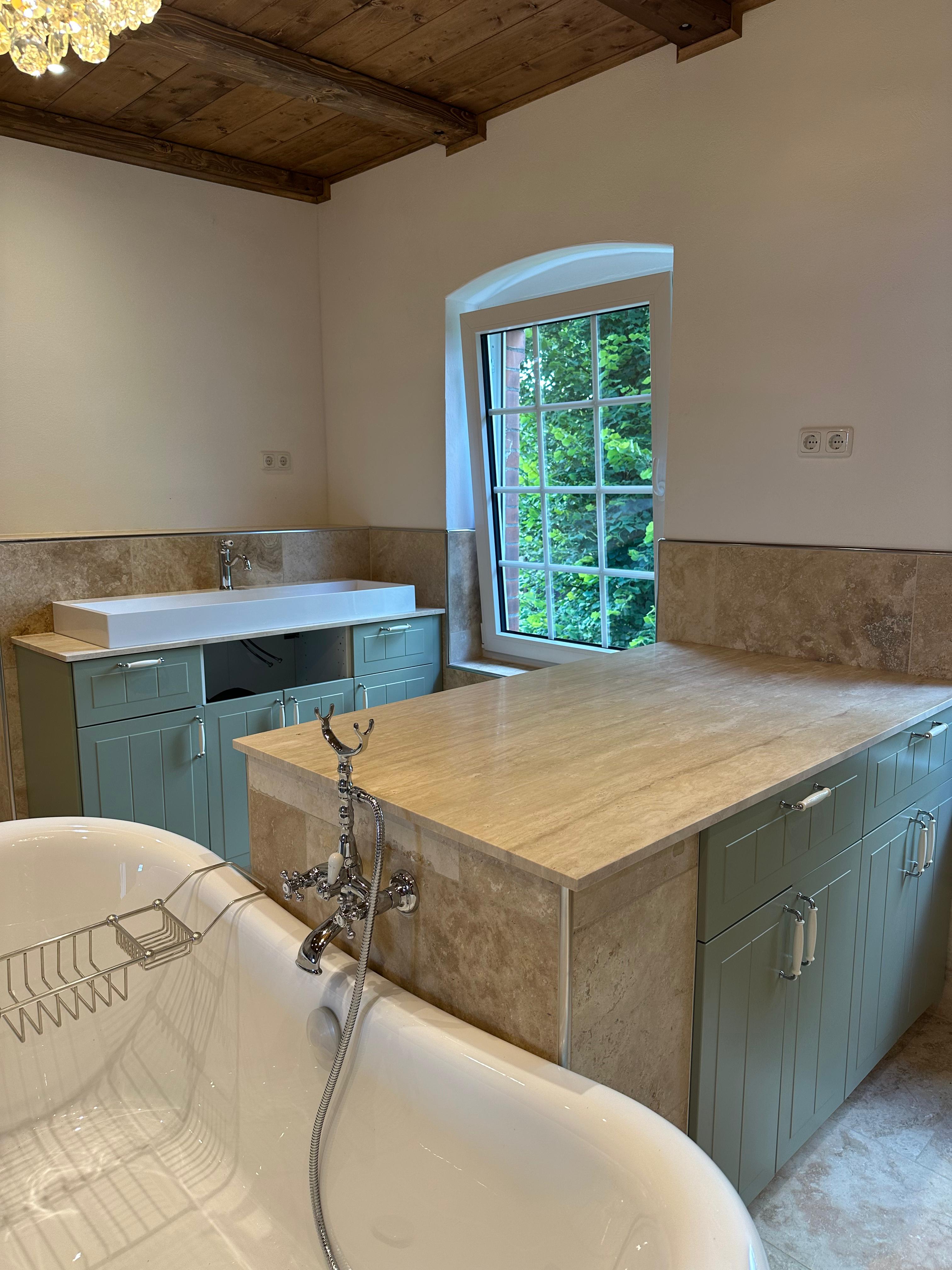
In kitchens and bathrooms, travertine is intentionally used to combine natural materials with functional design, creating a warm and harmonious atmosphere. Due to its geological formation, travertine has an open-pored structure, which means it is only conditionally recommended for kitchen countertops. The stone is not acid-resistant and can react sensitively to substances such as lemon juice, vinegar or certain cleaning agents, making maintenance more demanding compared to more resistant natural stones.
However, travertine is very well suited as kitchen flooring or as a backsplash, where it can express its natural aesthetic without being exposed to excessive stress. In bathrooms, travertine is particularly popular — used for floor tiles, vanity tops and wall cladding that create a calm, spa-like and inviting ambience.
For use in moisture-prone areas, professional sealing or impregnation is strongly recommended. This protective treatment enhances stain resistance and ensures the long-term durability and practicality of travertine in everyday use.
Travertine for Outdoor Applications
Travertine also reveals its natural charm in outdoor spaces, blending harmoniously into garden and terrace designs. With its warm natural tones and organically formed structure, the stone creates a seamless transition between architecture and landscape, enhancing the overall aesthetic of exterior environments.
Travertine is frequently used for terraces, garden pathways, pool surrounds and outdoor staircases. Depending on the surface finish, it offers a pleasant texture and good slip resistance, making it suitable for high-use outdoor areas. In sunny climates, travertine remains comparatively comfortable underfoot, even at higher temperatures, contributing to enjoyable and functional outdoor living spaces.
However, proper material selection and professional installation are essential for exterior use. Frost-resistant qualities, appropriate surface treatments and effective drainage systems ensure long-term durability against weather conditions. Regular sealing further protects the stone from moisture and stains, preserving the natural beauty and structural integrity of travertine for many years.
Terraces, Balconies and Garden Pathways
Travertine is ideal for terraces, balconies and garden pathways, as its natural surface creates a harmonious connection between architecture and outdoor space. The warm tones and organic texture enhance exterior designs while maintaining a timeless and elegant appearance.
Pool Surrounds and Façade Areas
As a pool surround, travertine stands out for its pleasant tactile quality and its ability to remain comparatively cool even under direct sunlight. This makes barefoot areas more comfortable and visually refined, while maintaining a natural and cohesive outdoor design.
Exterior Façades
When used on exterior façades, travertine adds timeless, natural elegance to buildings. The stone enhances architectural depth and gives properties a high-quality, sophisticated appearance that integrates seamlessly into both modern and classic designs.
Exterior Window Sills
Travertine is frequently used for outdoor window sills due to its durability and ability to blend harmoniously into façade concepts. Its natural structure ensures a refined and cohesive exterior look.
Outdoor Furniture Made of Travertine
Travertine is an excellent choice for bespoke outdoor furniture such as tables, benches and sculptural seating elements. The natural stone combines structural stability with timeless aesthetics. With the right surface treatment and professional craftsmanship, travertine remains durable outdoors and gradually develops an authentic patina that enhances its character over time.
Travertine for Refined Interior Design
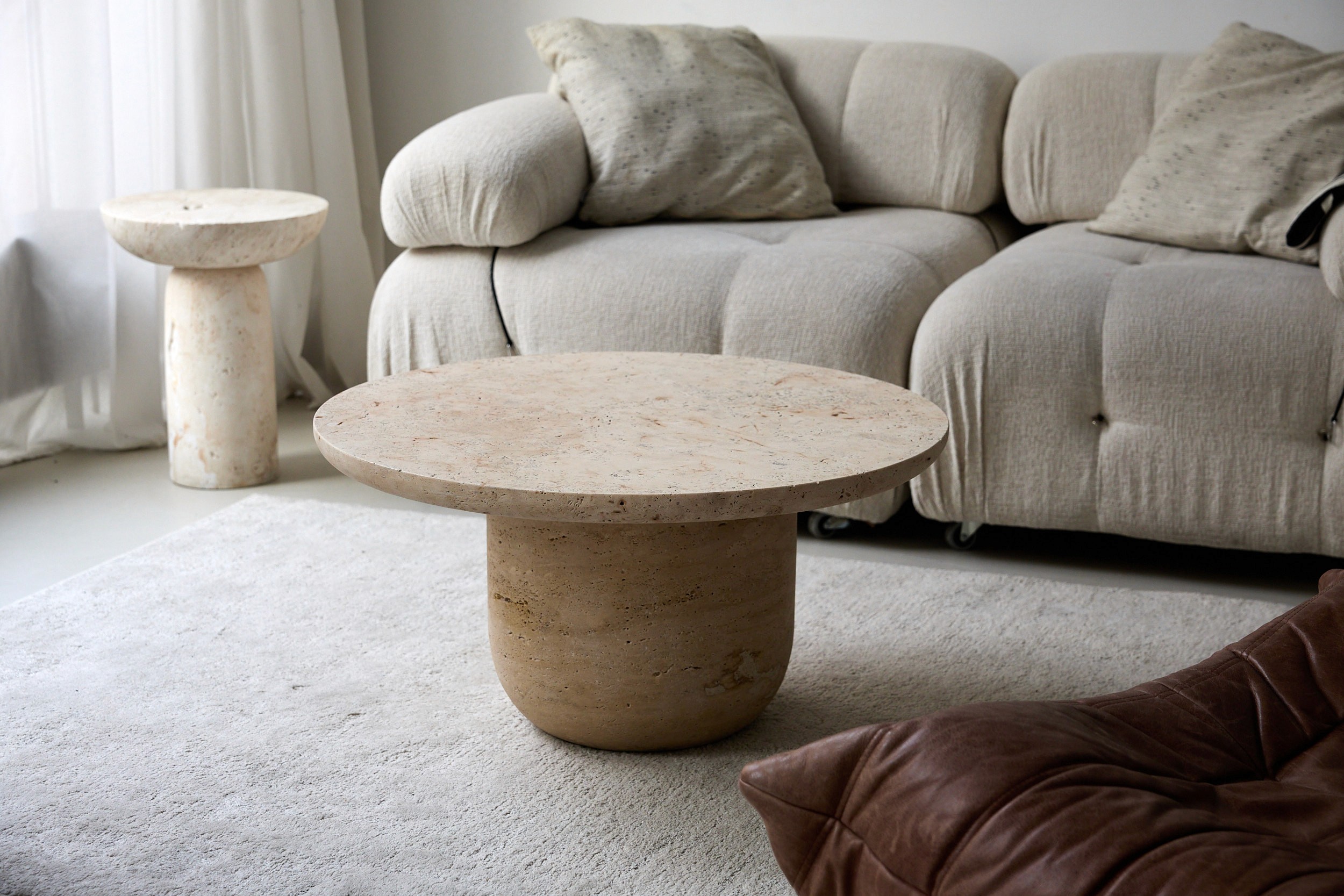
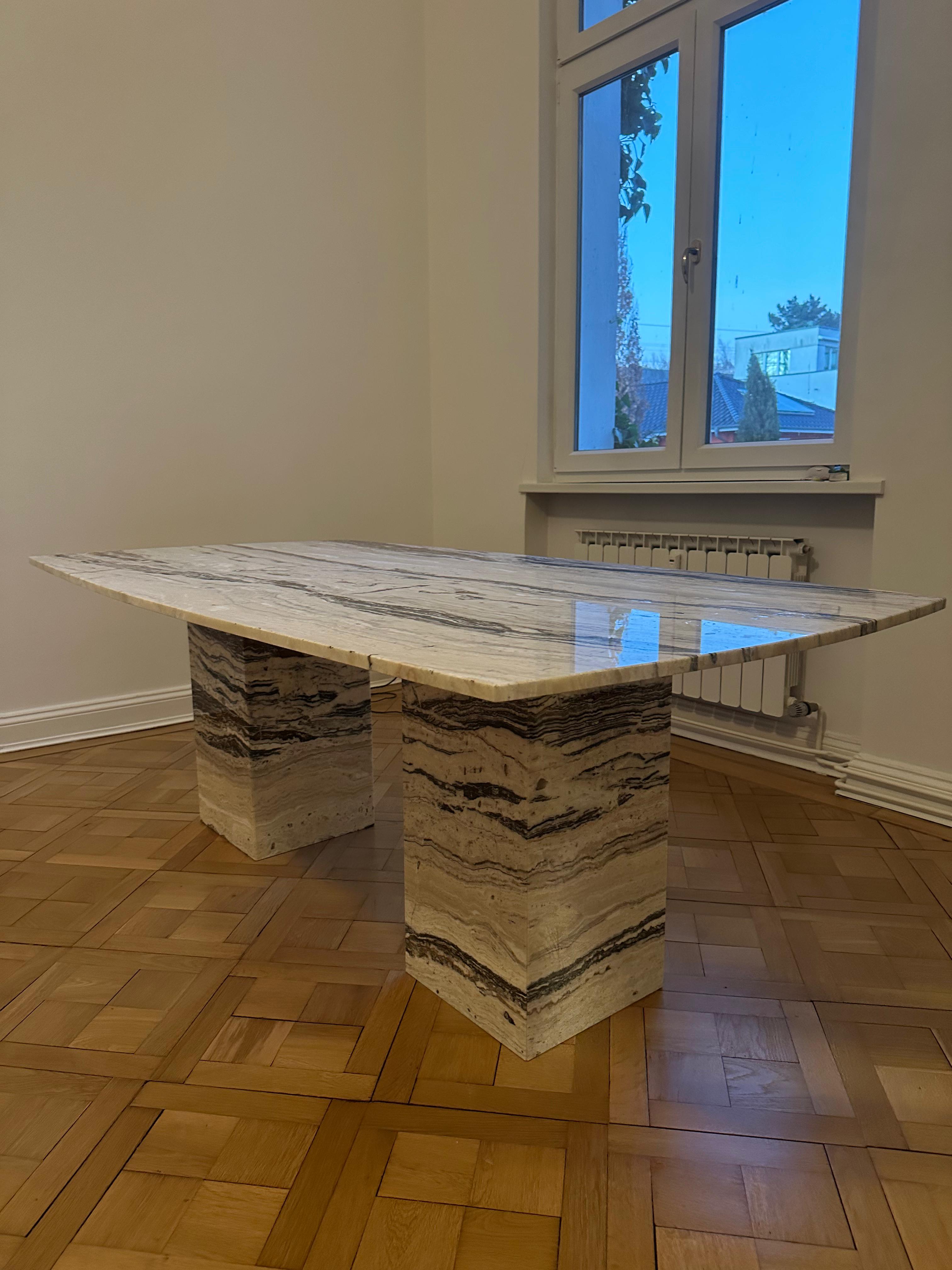
Beyond traditional applications, travertine is increasingly used as a distinctive material in interior design for furniture, wall cladding and decorative elements. This natural stone combines sculptural presence with a sense of calm, making it ideal for adding depth and material richness to contemporary spaces.
Whether crafted into bespoke tables, statement shelving, feature walls or architectural details, travertine introduces texture, warmth and authenticity into interior concepts. Its organic structure and subtle colour variations create visual interest without overwhelming the overall design, allowing it to function as both a focal point and a harmonious design element.
Tables, Side Furniture and Shelving
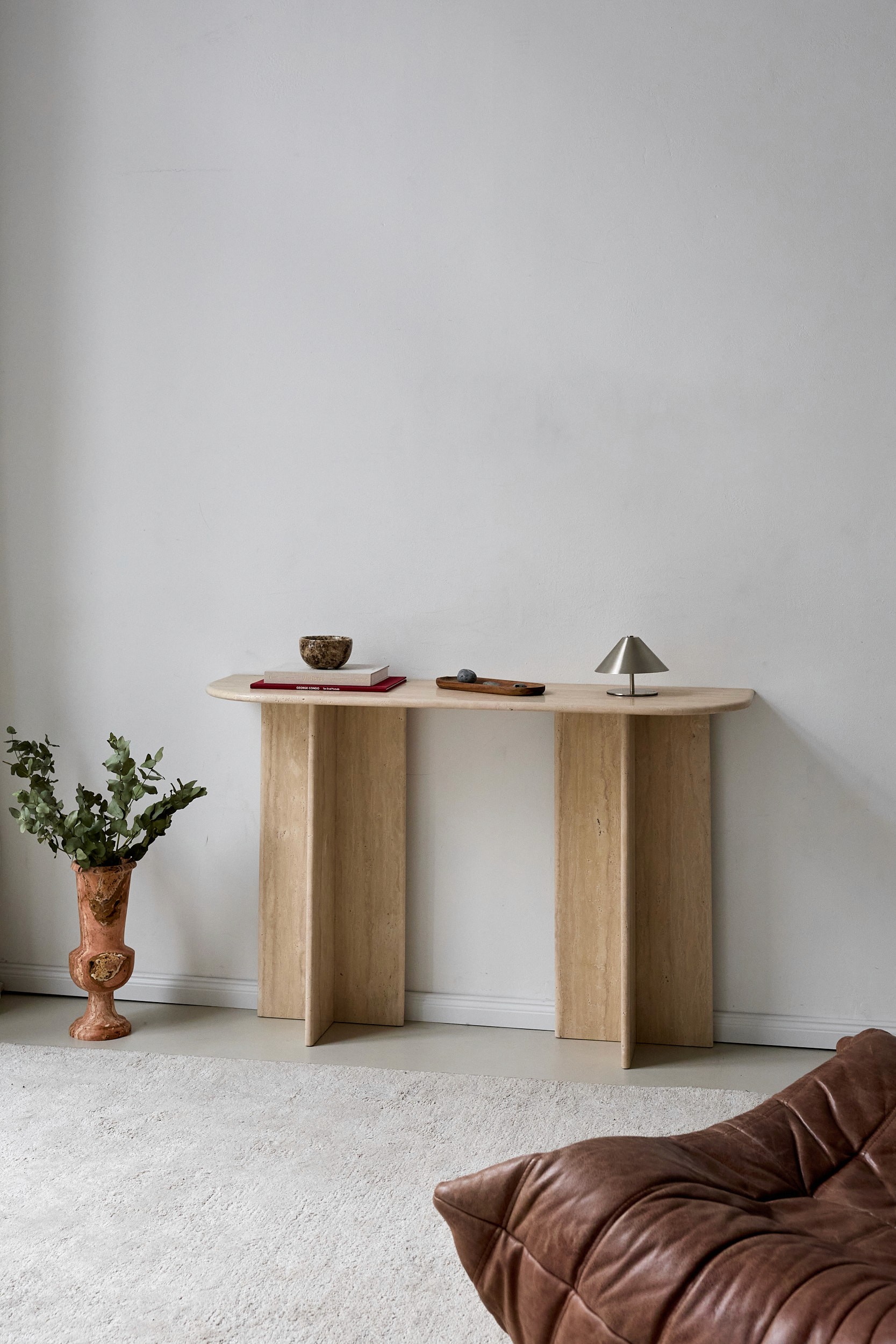
Travertine is frequently used for bespoke dining tables, coffee tables, side tables and shelving units, creating durable furniture pieces with a timeless, architectural presence. Its solid structure and natural texture make each piece unique, adding depth and material authenticity to interior spaces.
Decorative Objects and Accents
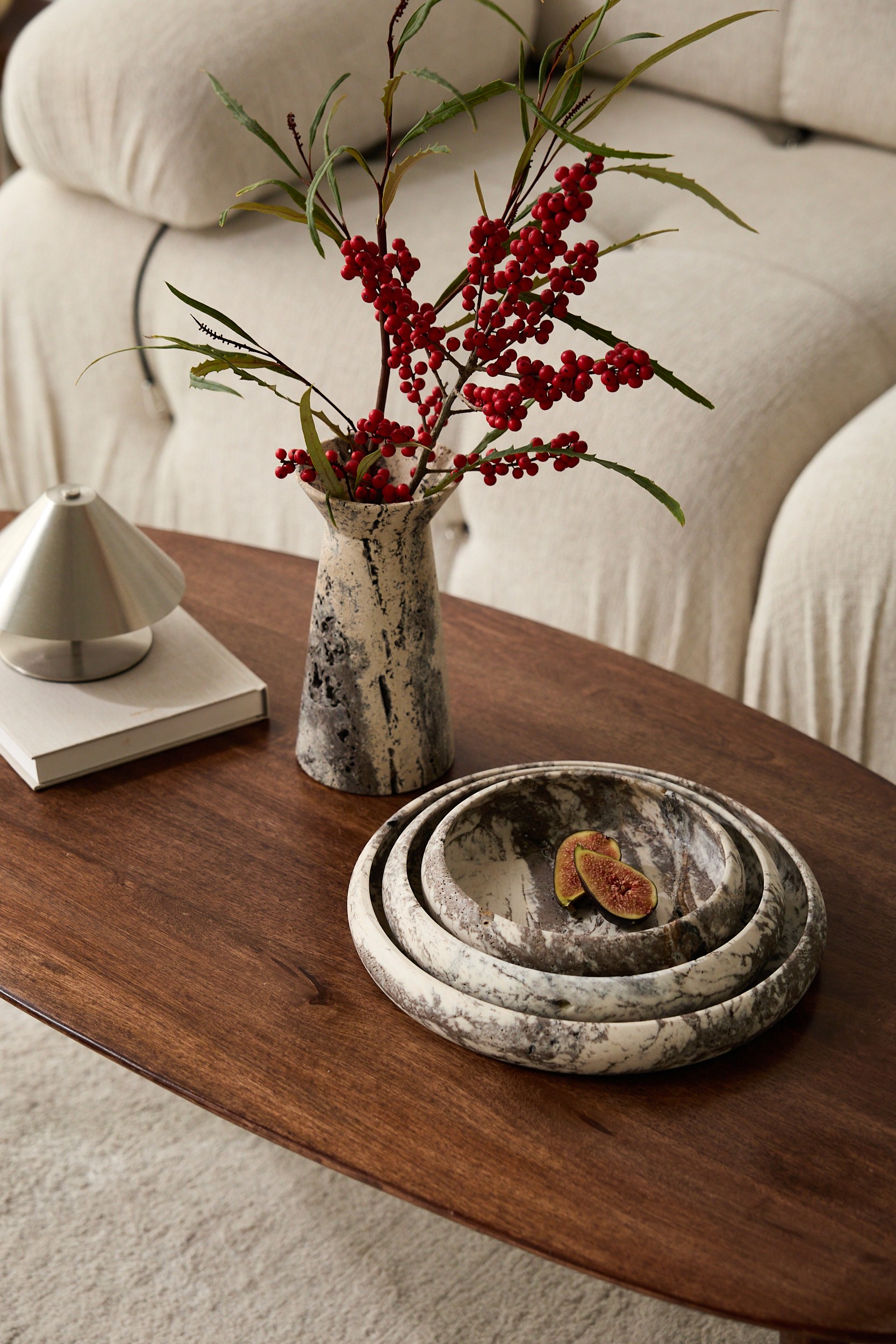
Travertine also unfolds its distinctive character in decorative applications — such as bowls, vases, sculptures or interior accessories. These elements introduce natural accents and subtle sophistication, enhancing interiors with organic texture and refined simplicity.
Travertine as a Statement Material
With its naturally formed structure and authentic surface, travertine is increasingly used as a statement material in contemporary interior design. It shapes entire design concepts, giving spaces a calm, high-quality identity while maintaining a sense of understated elegance and permanence.
Surface Finishing and Refinement
The surface finish plays a decisive role in how travertine looks, feels and performs in everyday use. Depending on the chosen treatment, the natural stone’s visual appearance, tactile quality, slip resistance and maintenance requirements can vary significantly.
Different surface finishes allow travertine to be adapted to specific applications — from smooth and refined indoor surfaces to textured, slip-resistant outdoor areas. The right finishing technique enhances both the aesthetic expression and the functional performance of the stone, ensuring it meets the demands of each individual project.
Honed
Honed travertine features a smooth, matte surface with a calm and elegant appearance. This finish is commonly used in interior spaces, as it creates a modern aesthetic while remaining relatively easy to maintain. The subtle surface enhances the stone’s natural character without adding shine, making it ideal for flooring, wall cladding and refined architectural details.
Brushed
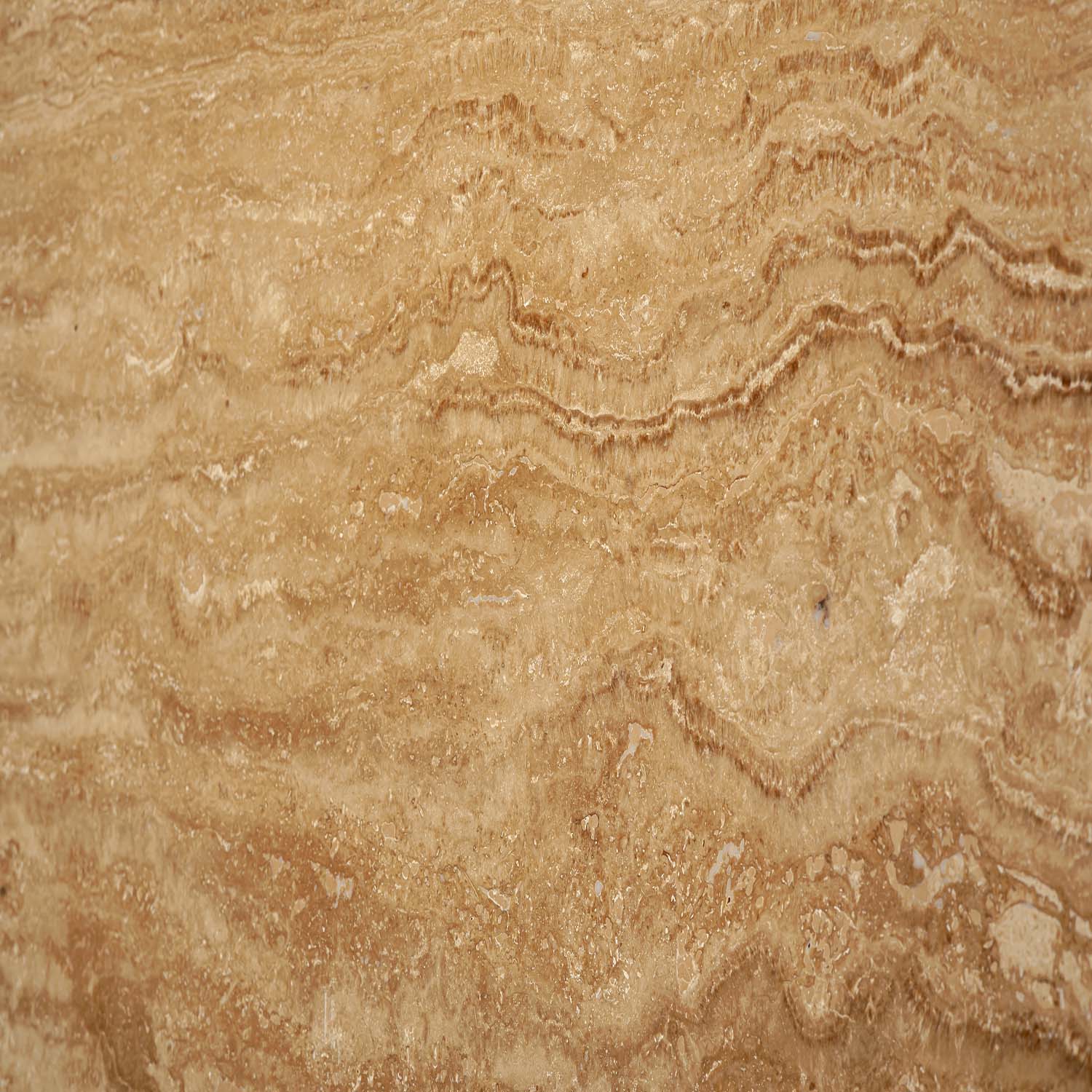
Brushed travertine has a gently textured, natural feel. The surface appears authentic and dynamic, highlighting the organic structure of the stone. This finish is particularly suitable for living areas or outdoor spaces where increased slip resistance is desired, combining visual warmth with practical functionality.
Polished
Polished travertine has a smoother, slightly glossy surface that intensifies the stone’s colours and natural patterns. This refined finish is typically used in representative interior areas or decorative elements where a more expressive and sophisticated appearance is required.
Filled vs. Unfilled Pores
Travertine can be processed with either filled or unfilled pores, depending on the desired aesthetic and functional requirements.
Travertine with filled pores has a more closed and even surface appearance. This finish creates a calmer, more uniform look and is generally easier to maintain, making it particularly suitable for interior spaces such as living areas, bathrooms or kitchens.
Unfilled travertine, on the other hand, emphasises the stone’s natural pores and organic texture, resulting in a more authentic and rustic character. However, this option typically requires slightly more maintenance and depends more strongly on proper sealing or impregnation to ensure long-term durability and stain resistance.
Overall, the chosen surface finish significantly influences both the maintenance requirements and the potential applications of travertine. Smoother and filled surfaces are generally more practical for interior spaces, as they are easier to clean and maintain. In contrast, textured finishes are better suited for outdoor use, offering improved slip resistance while emphasising the natural character and organic structure of the material.
Care, Cleaning and Protection of Travertine
With proper care, travertine remains beautiful and functional for many years. As a natural limestone, travertine requires appropriate cleaning and regular protective treatment to preserve its surface over the long term.
How to Properly Clean and Maintain Travertine
Regular maintenance of travertine is simple, provided that suitable cleaning products are used. As a limestone-based natural stone, travertine requires gentle care to preserve its natural surface over time.
Mild, pH-Neutral Cleaners
Only mild, pH-neutral cleaners specifically designed for natural stone should be used. These products effectively clean the surface without damaging or dulling the stone’s structure.
Avoid Acidic Products
Acidic cleaning agents such as vinegar, citric acid or harsh limescale removers should always be avoided. Since travertine contains calcium carbonate, acidic substances can damage the surface and weaken the stone’s structure.
Regular and Gentle Cleaning
Routine cleaning with warm water and appropriate natural stone care products is sufficient to keep travertine clean, well-maintained and functional in the long term. Consistent, gentle care helps preserve its natural beauty and durability for many years.
Professional Treatment of Travertine: Impregnation and Sealing
Depending on the area of application, impregnation or sealing can provide additional protection for travertine. Both methods are designed to make the surface more resistant to moisture, stains and everyday wear. However, they differ significantly in how they function and affect the stone.
Impregnation penetrates deep into the pores of the natural stone and works from within. It reduces the absorbency of travertine without significantly altering its natural appearance or texture. The stone remains breathable, meaning it can still allow moisture vapour to pass through, while being far better protected against stains.
This method is particularly recommended for flooring, wall cladding, bathrooms and outdoor applications. Depending on usage and exposure, impregnation should generally be renewed every one to three years to maintain optimal protection.
Sealing, by contrast, forms a protective layer on the surface of the stone. This creates a more pronounced barrier that temporarily repels liquids and contaminants. Sealing can be useful in heavily used interior areas or for certain decorative applications.
However, a sealed surface changes the tactile feel of the stone more noticeably and is less breathable compared to impregnated travertine. For this reason, sealing is often chosen selectively based on functional requirements.
Choosing the Right Protection
In kitchens and bathrooms, a high-quality impregnation is generally recommended to protect travertine from moisture and staining. For outdoor use, proper impregnation is especially important to increase resistance against weather conditions.
The most suitable treatment depends on the intended use, surface finish and level of wear. Professional consultation ensures that travertine remains protected in the long term while preserving its natural beauty and material integrity.
Is Travertine the Right Choice for Your Project?
Travertine is an excellent choice for projects where natural beauty, timeless elegance and architectural clarity are at the forefront. This natural stone is particularly well suited for high-end residential spaces, floor and wall designs, bathrooms, refined outdoor areas and bespoke furniture pieces with distinctive character. Its warm appearance and unique structure make it ideal for renovations, new builds and sophisticated interior design concepts.
However, achieving a long-lasting and convincing result depends on the quality of the material, precise craftsmanship and professional installation. Selecting the right travertine variation, appropriate surface finish and suitable protective treatment significantly influences durability and maintenance requirements. Expert consultation ensures that the natural stone is perfectly matched to your specific project.
When properly selected and processed, travertine offers lasting value. It is not merely a functional building material, but an authentic design element that develops character over time and gives spaces a sustainable, high-quality identity.
