
Natural Stone Kitchen Worktops: Stylish Design and Premium Functionality
Natural Stone Kitchen Worktops: Stylish Design and Premium Functionality
Natural Stone Kitchen Worktops: Stylish Design and Premium Functionality
Whether you are looking to renovate and upgrade your existing kitchen worktop or planning a new kitchen, a natural stone worktop is always a high-quality and long-lasting choice. It combines timeless design with exceptional durability and brings the natural beauty of unique materials into your home.
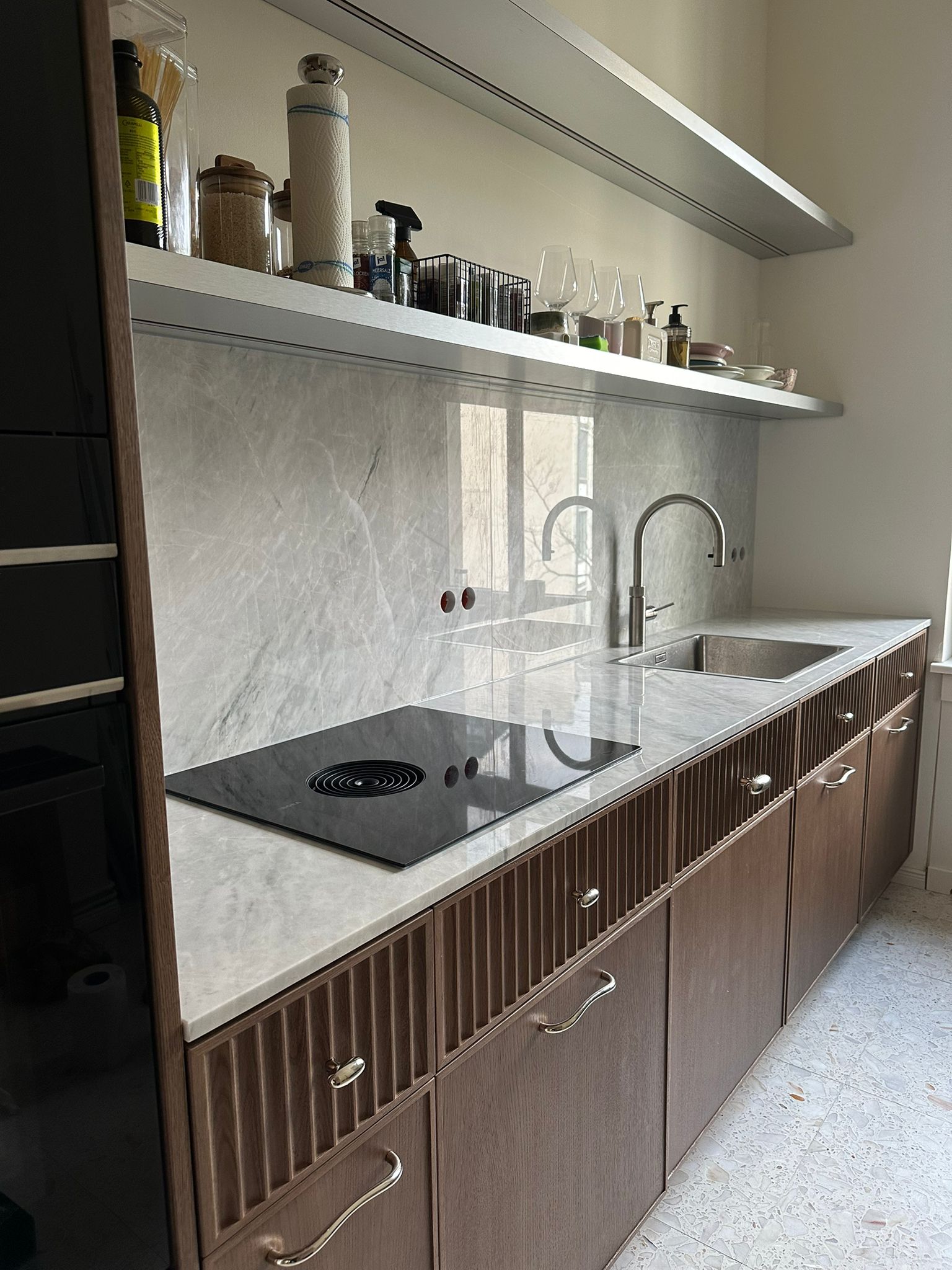
Kitchen Worktops: A Key Decision When Planning Your Kitchen
The kitchen accompanies us throughout the entire day, from the first coffee in the morning to a glass of water in between, all the way to cooking and shared evenings with family and friends. As a result, the kitchen worktop is one of the most frequently used surfaces in the home, making factors such as hygiene, durability, and ease of maintenance essential.
A natural stone kitchen worktop combines high-end design with maximum functionality and longevity. Natural stones such as granite, which are particularly well suited for kitchen worktops, are extremely robust and resistant, even hot pots or pans can be placed on the surface without concern. Compared to materials like wood or ceramic, they offer significantly greater durability, making them the ideal choice for those who value quality, performance, and long-term use.
Best Natural Stones for Kitchen Worktops
Granite Worktops for Kitchens: Durable, Low-Maintenance and Built for Daily Use
We recommend granite as one of the best materials for kitchen worktops. Granite is an exceptionally hard natural stone that is highly scratch-resistant and extremely durable against external influences. It is resistant to acids -for example if a glass of wine is spilled- and also heat-resistant, allowing hot pots and pans to be placed on the surface without concern.
Granite also stands out for its ease of maintenance. Compared to materials such as wood, ceramic, or engineered stone, a granite worktop is significantly more durable and easier to care for. Thanks to its robustness, granite is ideal for everyday use and is particularly recommended for families with children or kitchens that see frequent, intensive use.
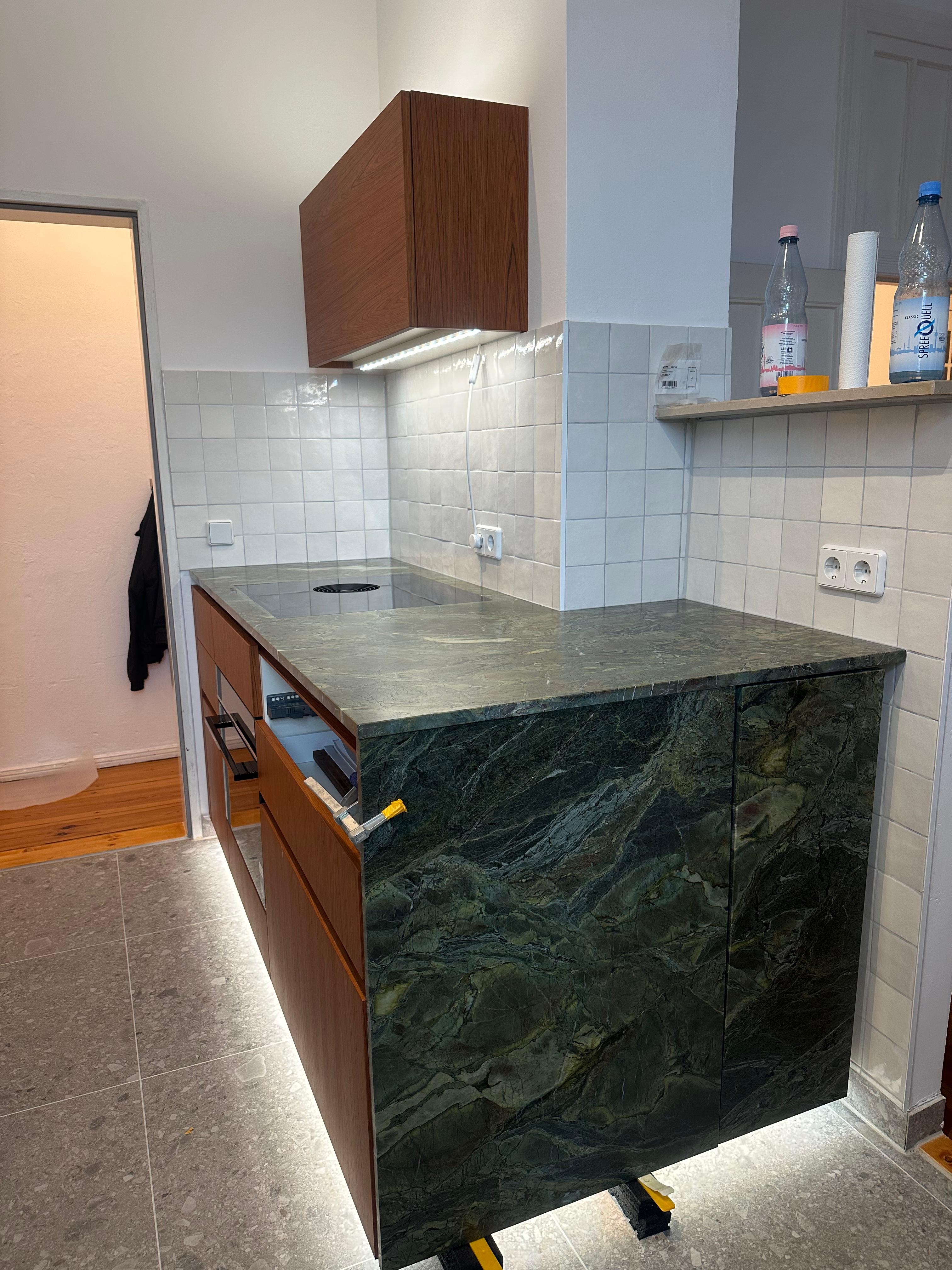
Marble Kitchen Worktops: Aesthetic Appeal, Individuality and Natural Patina
Marble as a kitchen worktop stands out for its refined appearance and distinctive, natural aesthetic. At the same time, compared to granite, marble is a more sensitive natural stone, particularly when it comes to acids and staining.
This means that everyday substances such as lemon, vinegar, or wine should be removed from the surface as quickly as possible, as they can otherwise penetrate the stone and leave visible marks. Many clients consciously choose marble for this very reason, embracing the natural patina that develops over time as part of the design – a reflection of individuality and lived experience.
Within our collection, we also offer particularly dense and durable marble types that are well suited for kitchen worktops, such as Dark Magenta(link) and Tortoise Green(link). For those looking to create a design-led kitchen with a luxurious feel, a marble worktop is a distinctive and elegant choice. While signs of use may appear more quickly in everyday life, they add depth, character, and a unique sense of authenticity to the surface

Travertine Kitchen Worktops: Natural Beauty and Warm Character
Travertine is a porous and relatively soft natural stone. If you choose travertine for your kitchen worktop, it is important to consider that liquids and food can penetrate its open pores. As a result, travertine worktops require more care and maintenance compared to other natural stones.
Travertine is also less resistant to heat and acids. For this reason, we primarily recommend it for applications with lower levels of wear. For a warm, Mediterranean look, travertine works particularly well in a filled and honed finish or as a kitchen backsplash, where it is exposed to less daily stress than the worktop surface.
Choosing the Right Natural Stone Slab
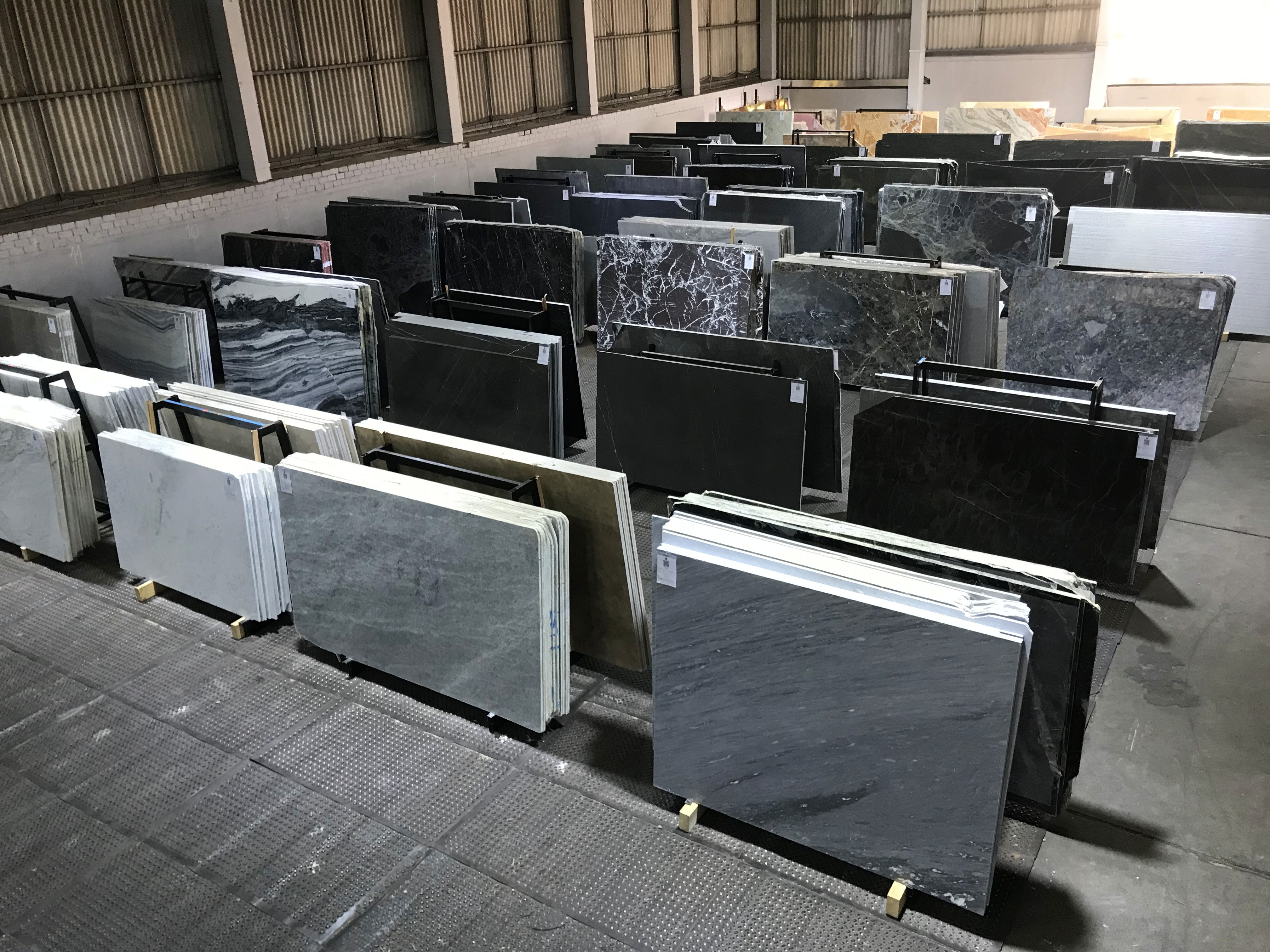
Even within the same type of stone, there can be significant variations. Factors such as origin, the individual block, and the processing method all have a strong influence on colour, veining, and structure. Every natural stone slab is one of a kind – shaped over millions of years, each piece tells its own story.
If you choose a granite worktop, for example, you benefit from excellent heat resistance, acid resistance, and scratch durability. Within our exclusive collection, you will find a wide range of distinctive granites, including green varieties such as Costa Smeralda, Verde Picasso, and Verde Borgogna, which are ideal for modern and elegant kitchens. We also offer classic options like Nero Assoluto and Chaotic Black, perfectly suited to timeless, minimalist designs.
In the marble category, we offer selected denser and more durable varieties that are well suited for kitchen worktops, such as Dark Magenta and Tortoise Green. In addition, our collection includes classic white, black, and other marble types that can be chosen depending on usage and design preferences.
As each slab is unique, we recommend selecting your stone in person before making a final decision. In our Berlin showroom, we present a curated selection of samples and provide individual consultation. You also have the opportunity to visit our warehouse and choose your preferred slab directly on site.
How Surface Finishing Transforms Natural Stone into a Long-Lasting Kitchen Worktop
Comparing Surface Finishes for Kitchen Worktops
Choosing the right surface finish plays a crucial role in the appearance, feel, and maintenance of a natural stone kitchen worktop. In general, the main distinction is between polished and honed (also referred to as matte) finishes.
A polished surface is smooth, glossy, and particularly easy to maintain. Dirt and residues can be removed quickly and effortlessly with a cloth, as liquids are less likely to adhere to the surface. However, fingerprints, dust, and water marks tend to be more visible, especially on darker stones.
A honed or matte surface offers a more natural look and a soft, velvety feel. It enhances the original character of the natural stone and is often preferred for modern, minimal kitchen designs. In everyday use, fingerprints and light marks are less noticeable, although cleaning can be slightly more demanding due to the more open surface structure.
Ultimately, the choice between polished and honed finishes depends not only on the desired design but also on your expectations in terms of maintenance and everyday use.
Kitchen Worktop Design: Edge Options and Bespoke Details
Beyond the choice of material, the edge profile plays a key role in the overall look of a kitchen worktop. It has a strong influence on the style – from classic to modern – and offers a variety of possibilities for individual design.
1. Polished Edge
In this classic finish, the visible edge of the natural stone slab, typically 2 cm thick, is polished by hand. The result is a clean, elegant look that feels timeless and integrates beautifully into almost any kitchen design.
2. Rounded Edge
Here, the visible edge is softly rounded and then polished. This option creates a softer, more modern appearance and contributes to a minimal, harmonious overall aesthetic. It is also especially pleasant and practical for everyday use.
3. Mitred Edge (mitre-joined finish)
For a particularly substantial and high-end look, an additional fascia can be produced in the desired height and joined to the worktop using a mitred edge. This creates the appearance of a much thicker slab, even though the actual stone thickness may only be 2 cm – ideal for an exclusive, architectural finish.
We advise our clients in detail on every design decision – from selecting the right stone to choosing details such as the edge profile – and guide you step by step towards your individual dream kitchen.
Planning and Installation of Natural Stone Kitchen Worktops
When planning and installing a natural stone kitchen worktop, there are several important aspects to consider. Natural stone is a premium material, but it is also heavy, which means weight plays a key role – particularly in older buildings where structural conditions must be taken into account.
Another important factor is the layout of the kitchen, as it directly influences the design and planning of the worktop. The most common kitchen layouts include:
Single-wall kitchen (one-wall layout)
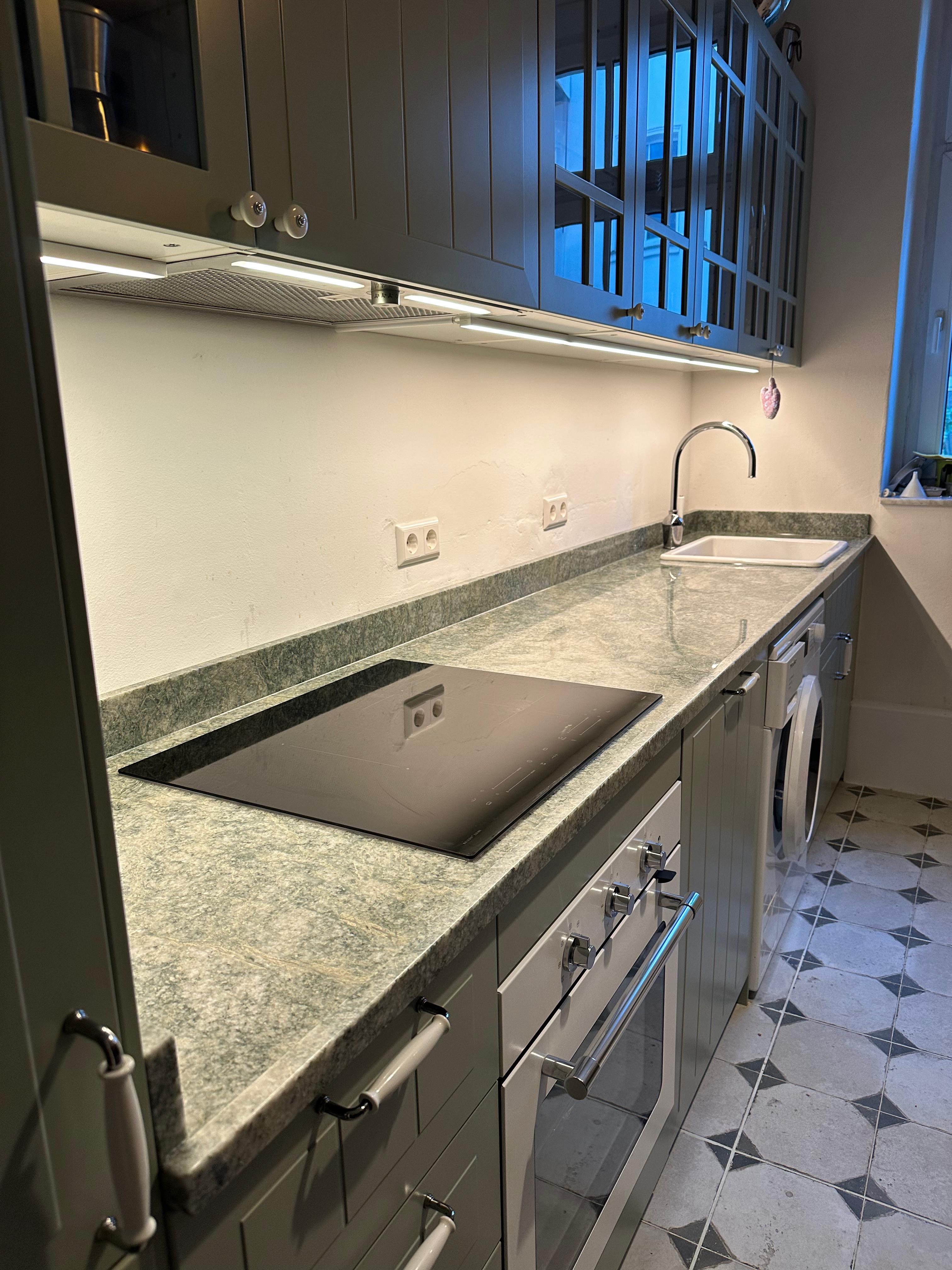
L-shaped kitchen (corner layout)
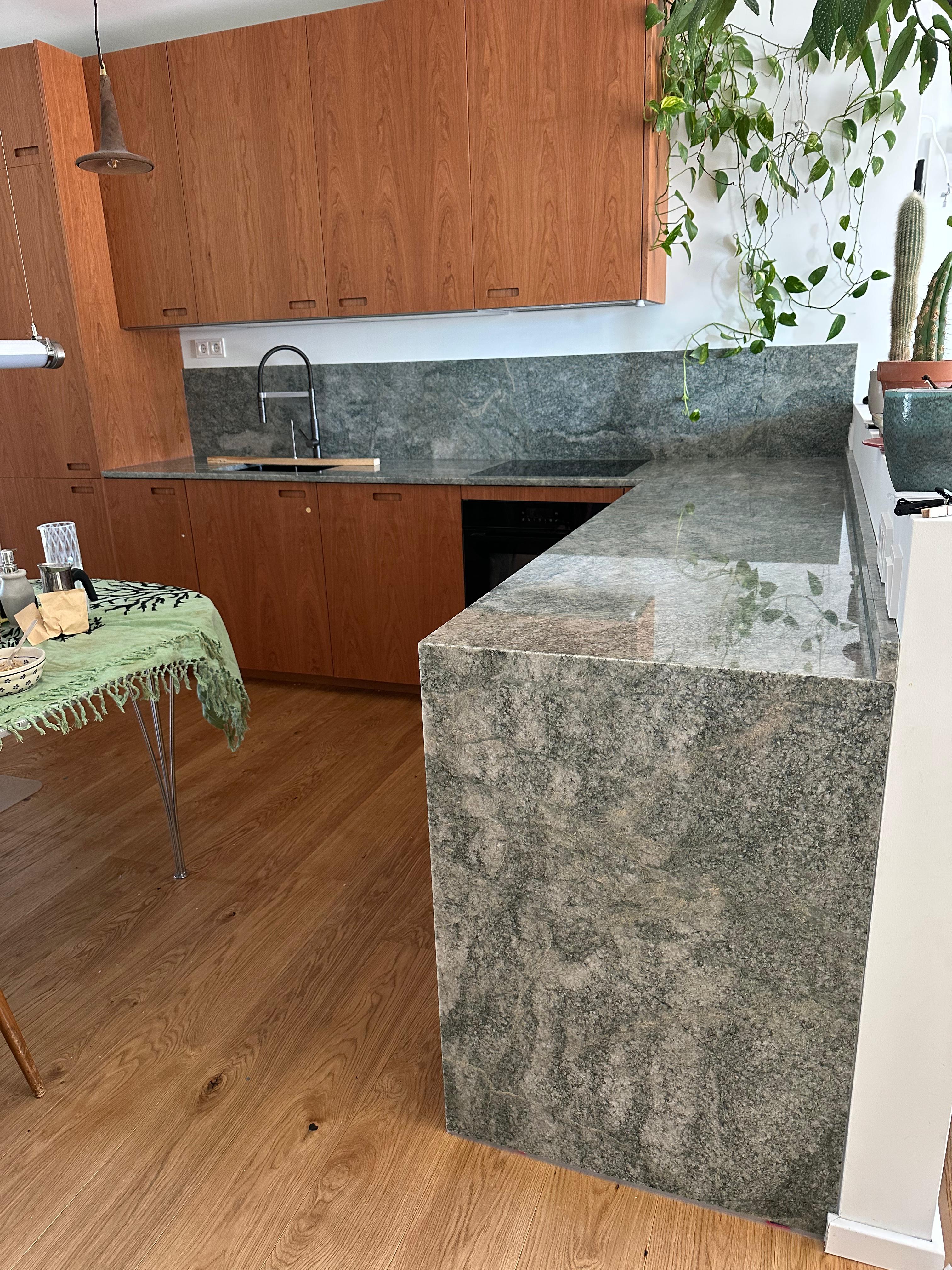
U-shaped kitchen
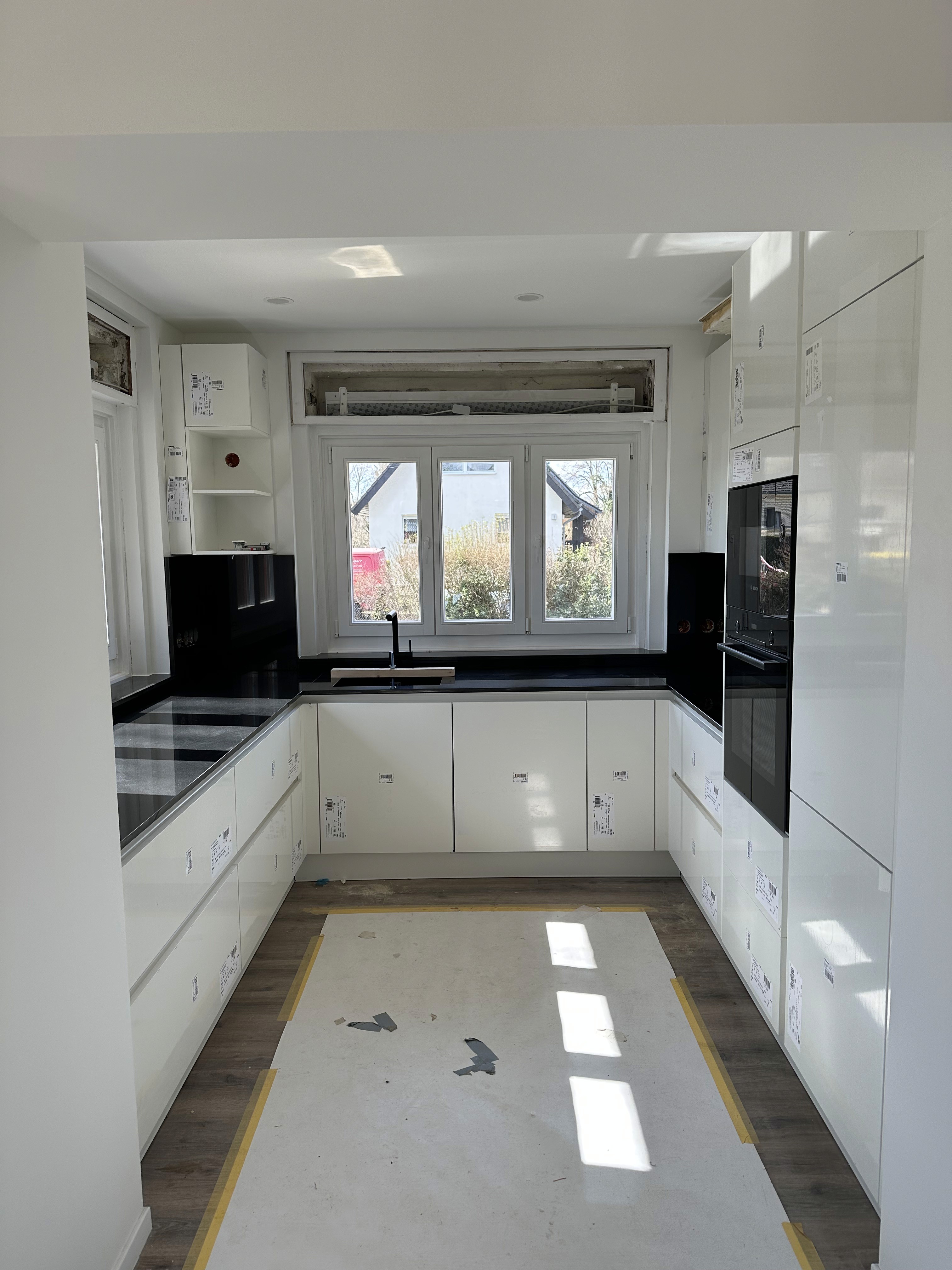
G-shaped kitchen (U-shape with peninsula or bar)
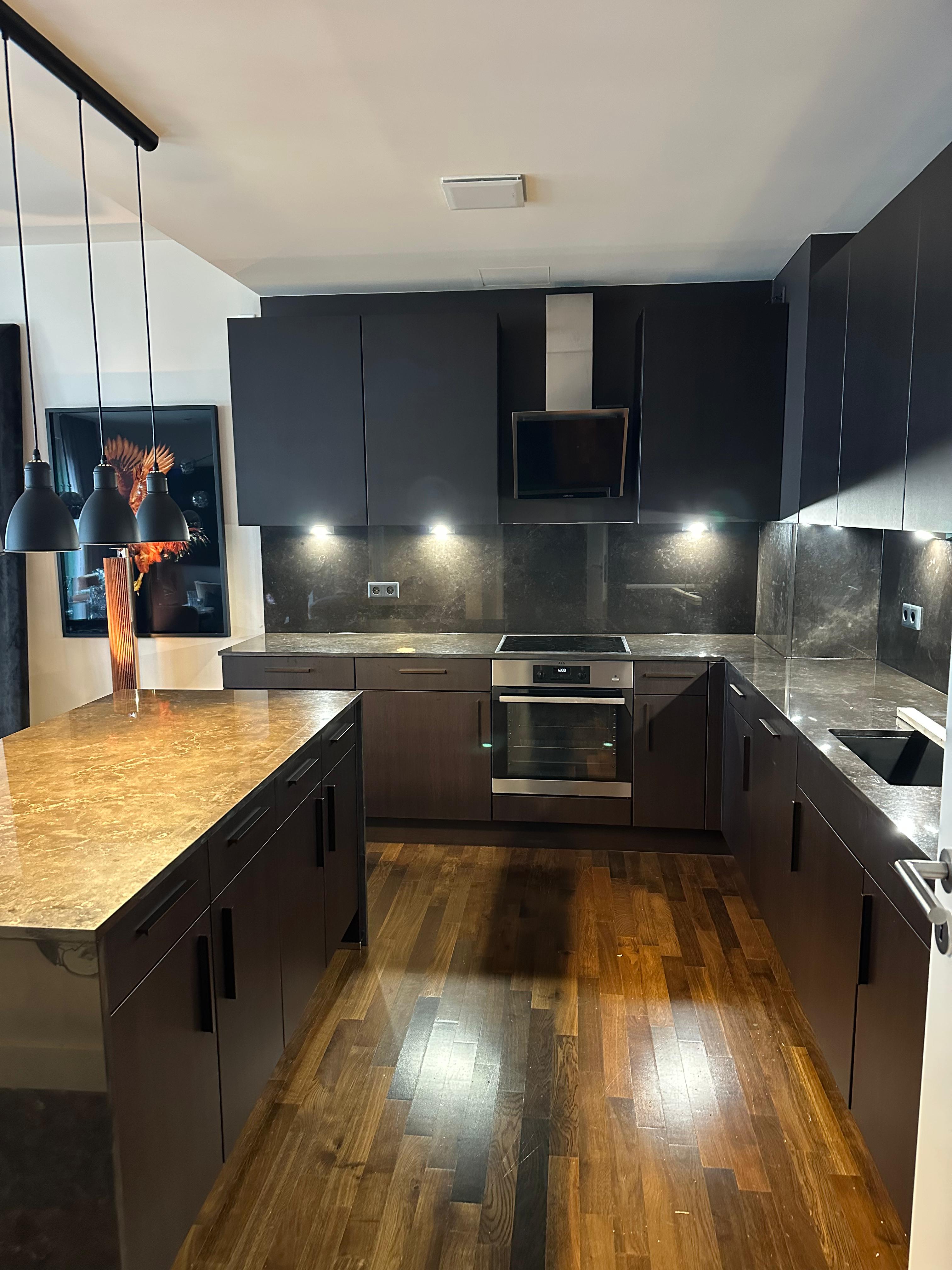
Kitchen with island

Each of these kitchen layouts comes with different requirements in terms of custom fabrication, cutting, and installation of the natural stone worktop.
We plan every kitchen project individually, tailoring both the material and the execution precisely to our clients’ needs and spatial conditions—resulting in a perfect balance of design, functionality, and long-lasting quality.
Custom-Made Kitchen Worktops: Fabrication and Preparation
When planning a kitchen, professional execution and precision are essential to achieve a perfect result. That is why every project begins with a personal consultation in our Berlin showroom. There, we take the time to fully understand our clients’ needs and preferences, and to select the most suitable natural stone for their intended use.
The next step is an on-site measurement appointment. Our installation team assesses the space, identifies any potential challenges, and takes precise, millimetre-accurate measurements of the kitchen. Having the same team handle both the measurement and the installation ensures the highest level of precision and a seamless process.
After the measurement, all details are reviewed internally and adjusted if necessary. Once the project is confirmed, production of the kitchen worktop begins in our own workshop in Germany. Our experienced stonemasons, who have worked with natural stone for decades, craft each piece with the utmost care. The worktop is fabricated with millimetre precision based on the technical drawings created by our installation team following the on-site measurement.
Once production is complete, we contact you to schedule the installation. On the day of installation, our team manages the entire process, from delivery to professional fitting. Naturally, we leave the site clean, so you can immediately enjoy your new kitchen worktop.

Construction Requirements and Technical Aspects
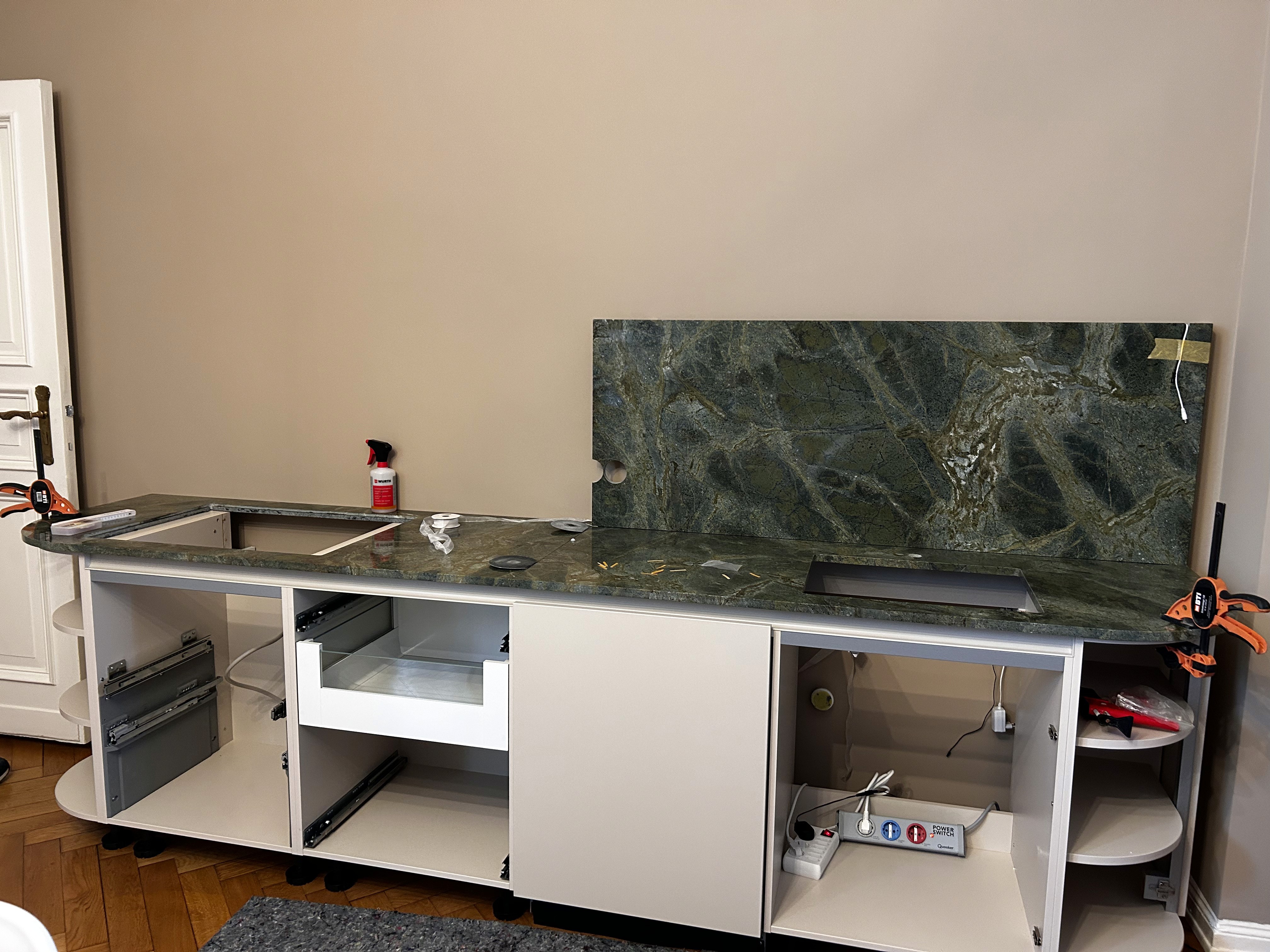
When planning a natural stone kitchen worktop, a stable and properly constructed substructure is essential. This can consist of standard kitchen cabinets or custom-built solutions by a carpenter. The key requirement is that the substructure can reliably support the weight of the natural stone worktop.
Our natural stone slabs typically have a standard thickness of 2 cm. This provides an optimal balance between stability, durability, and overall weight, making it ideal for use in the kitchen.
Integrating Sinks and Kitchen Appliances into Your Worktop
When integrating a sink into a natural stone kitchen worktop, there are several options to choose from. The decision primarily depends on the desired design and the overall aesthetic of the kitchen.
1. Undermount Sink
The sink is installed beneath the worktop, creating a particularly elegant and seamless look. It also makes cleaning easier, as there are no edges on the surface.
2. Top-Mounted Sink
In this case, the sink sits on top of the worktop. This option is functional and classic, although the transition between sink and surface remains visible.
3. Flush-Mounted Sink
The sink is integrated perfectly flush with the worktop. The result is a modern, clean appearance with smooth, continuous transitions.
Once you have chosen your preferred option, all details will be discussed during the on-site measurement appointment with our installation team. Early coordination is essential to ensure that the kitchen worktop is precisely planned and fabricated from the very beginning.
Production and Installation Process
The production of a natural stone kitchen worktop typically takes between 1 and 3 weeks, depending on the size and complexity of the project.
Installation is then carried out quickly and efficiently. Depending on the scope of the worktop and the stage of the project, fitting is usually completed within a single day.
From the initial consultation onwards, our team takes care of the entire process; from planning and production to installation. We handle every step, ensuring your kitchen worktop is perfectly installed in your home, so you can simply enjoy the finished result.
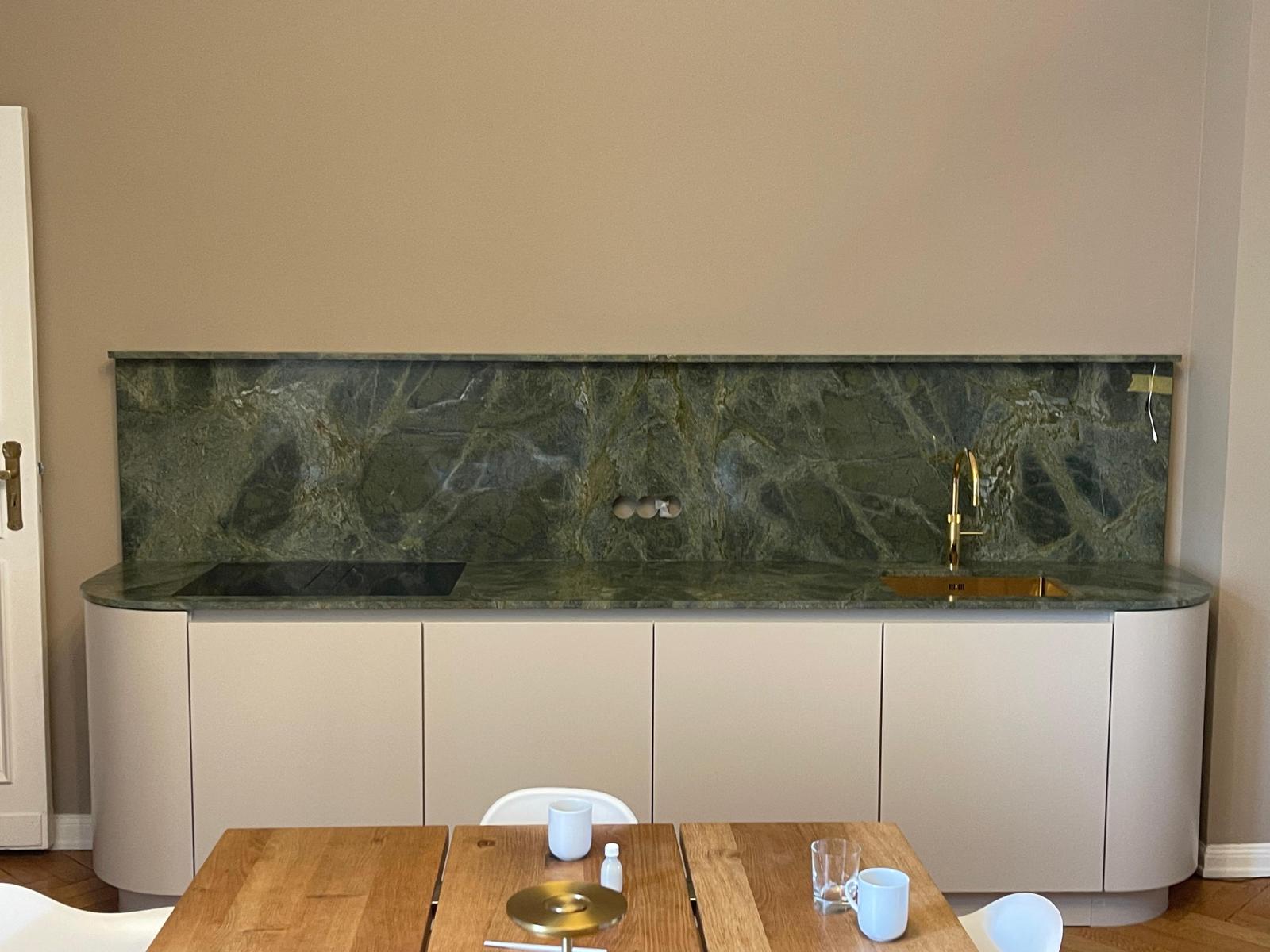
Care and Everyday Use: How to Keep Your Natural Stone Kitchen Worktop Beautiful for Years
Everyday Cleaning and Care for Natural Stone Worktops
For daily cleaning of a natural stone kitchen worktop, choosing the right cloth is essential. We recommend using soft materials such as a cotton or microfibre cloth to clean the surface gently and effectively.
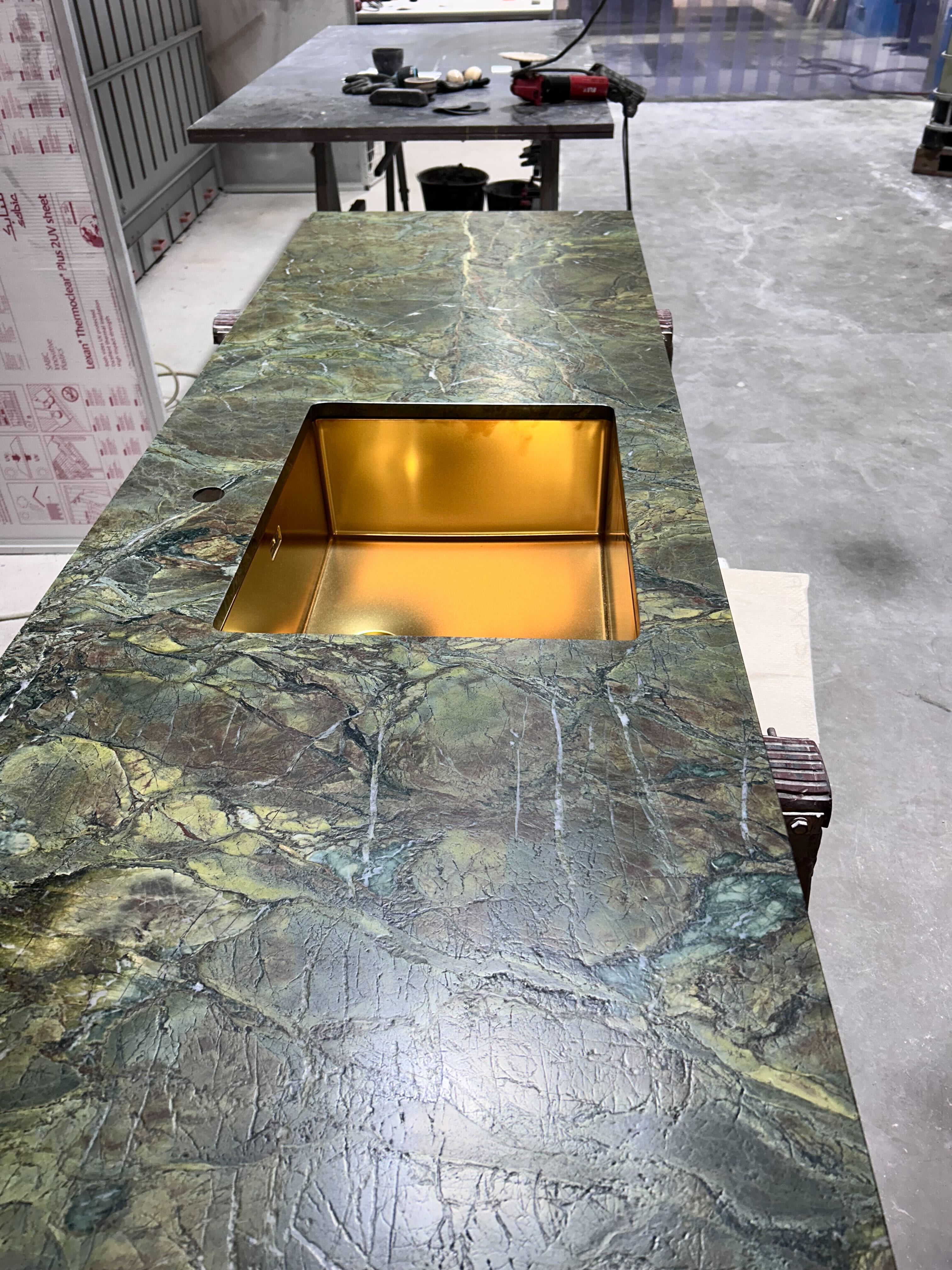
Our natural stone slabs are professionally impregnated in our facility before installation. This treatment provides long-lasting protection against stains and acids while making everyday maintenance easier. Typically, the impregnation lasts around 3 to 4 years, although it can be renewed earlier if needed, especially for marble worktops.
For everyday cleaning, we recommend using specialised natural stone cleaning products, such as those from Litofin, which are also available through us. They ensure gentle care and help preserve the natural beauty of the stone for many years.
Stains, Limescale and Everyday Kitchen Use: How to Keep Your Worktop Looking Beautiful
In everyday kitchen use, stains and limescale can build up quickly. For a particularly low-maintenance solution, we recommend durable natural stones such as granite. Granite is highly resistant to stains and easy to clean on a daily basis, even grease or acidic substances can usually be removed without leaving permanent marks.
With marble kitchen worktops, it is important to note that the material is more sensitive to grease, acids, and limescale compared to granite. Stains can penetrate the surface more easily, which is why mindful use in everyday life is essential.
We discuss all of these aspects in detail during a personal consultation in our showroom. This allows us to select the most suitable natural stone together, tailored to your priorities in design, functionality, and maintenance.
Although our worktops are professionally impregnated to provide additional protection, careful use in daily life remains important to preserve the natural beauty of the stone over the long term.
Sealing and Long-Term Maintenance of Natural Stone Worktops
All kitchen worktops are professionally impregnated in our production facility before installation, with the highest level of precision. This treatment significantly increases the surface’s resistance to stains and everyday wear.
We recommend renewing the impregnation approximately every 3 to 4 years. We are happy to advise you on how this can be done easily and effectively.
For marble worktops or kitchens with intensive use - such as frequent cooking with sauces, lemons, or wine - it may be beneficial to reapply the impregnation more regularly, for example every 6 to 12 months. This ensures that your natural stone worktop remains well protected and retains its beauty over the long term.
Design und Kombinationen: Naturstein harmonisch integrieren
Natural Stone Worktops in Combination with Kitchen Fronts
We offer a wide range of natural stones that can be harmoniously combined with a variety of kitchen fronts. The right balance of material, colour, and texture plays a key role in the overall look of the kitchen.
Here are some proven combinations from our projects:
1. Dark Wood Fronts
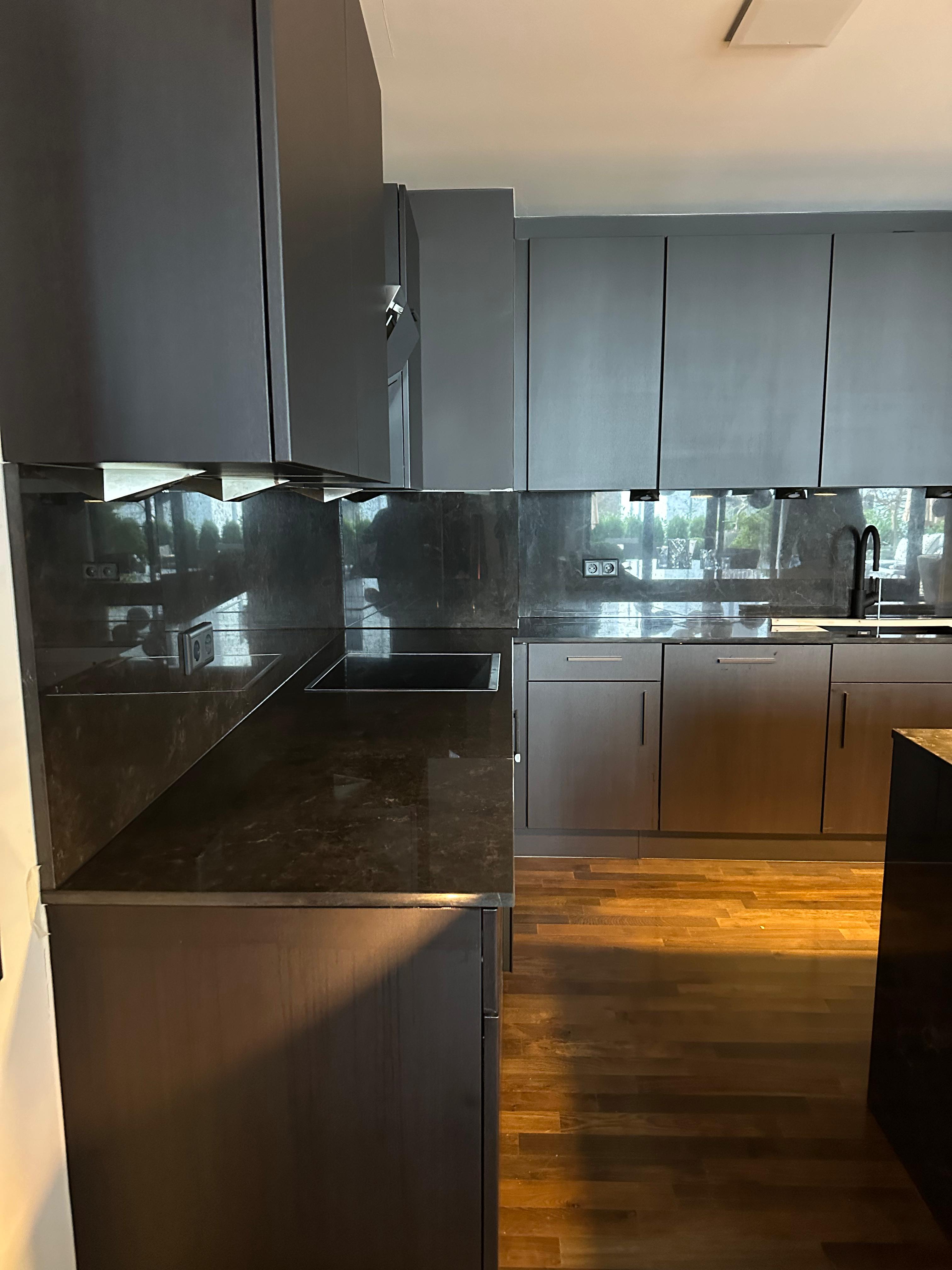
Dark wood cabinetry pairs beautifully with deep green granite worktops such as Costa Smeralda or Verde Picasso, as well as with light marble varieties that create an elegant contrast.
2. Light Wood Fronts
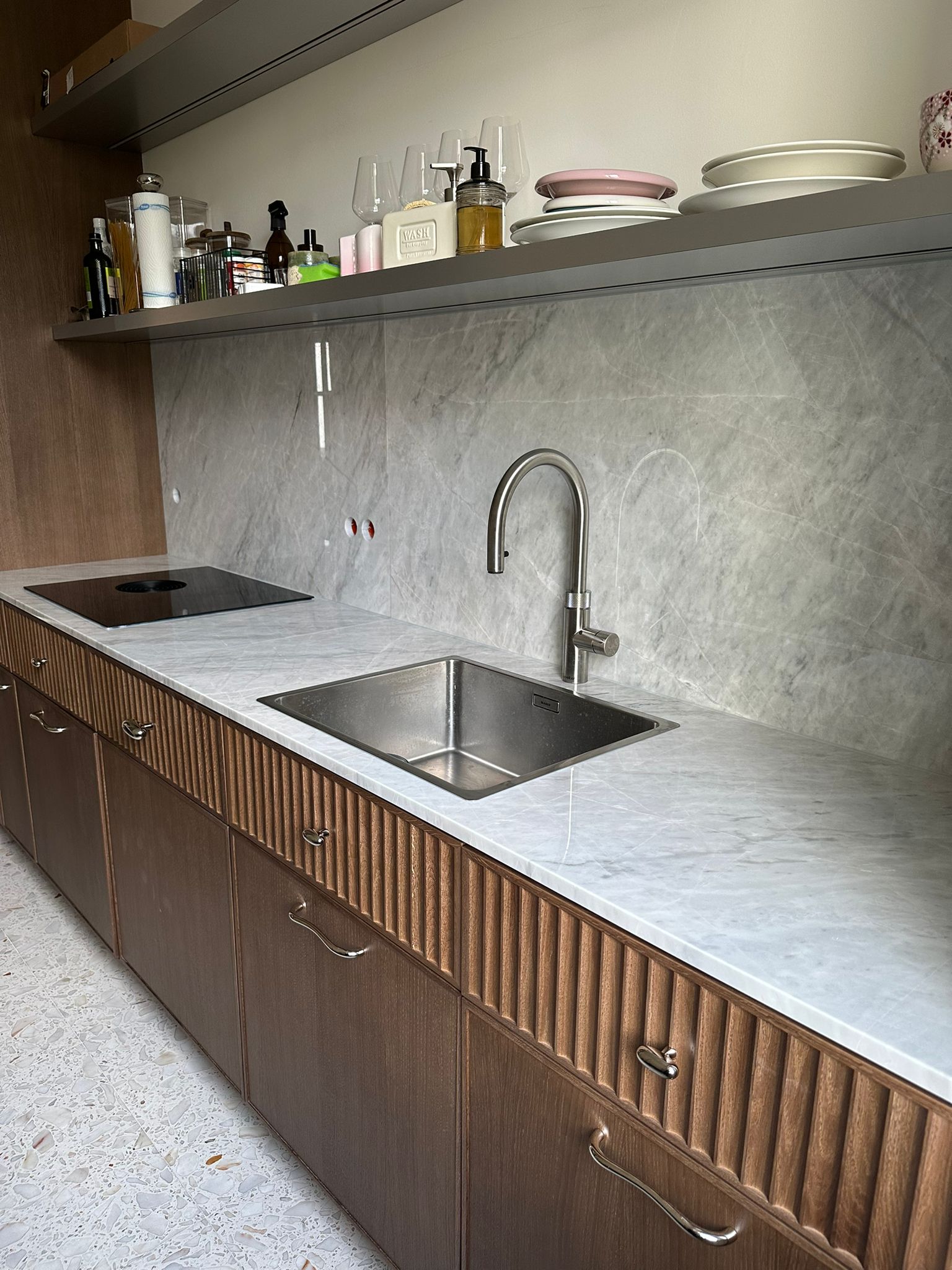
For light wood cabinetry, we recommend light-coloured granite worktops or white marble varieties that enhance the natural lightness and elegance of the design.
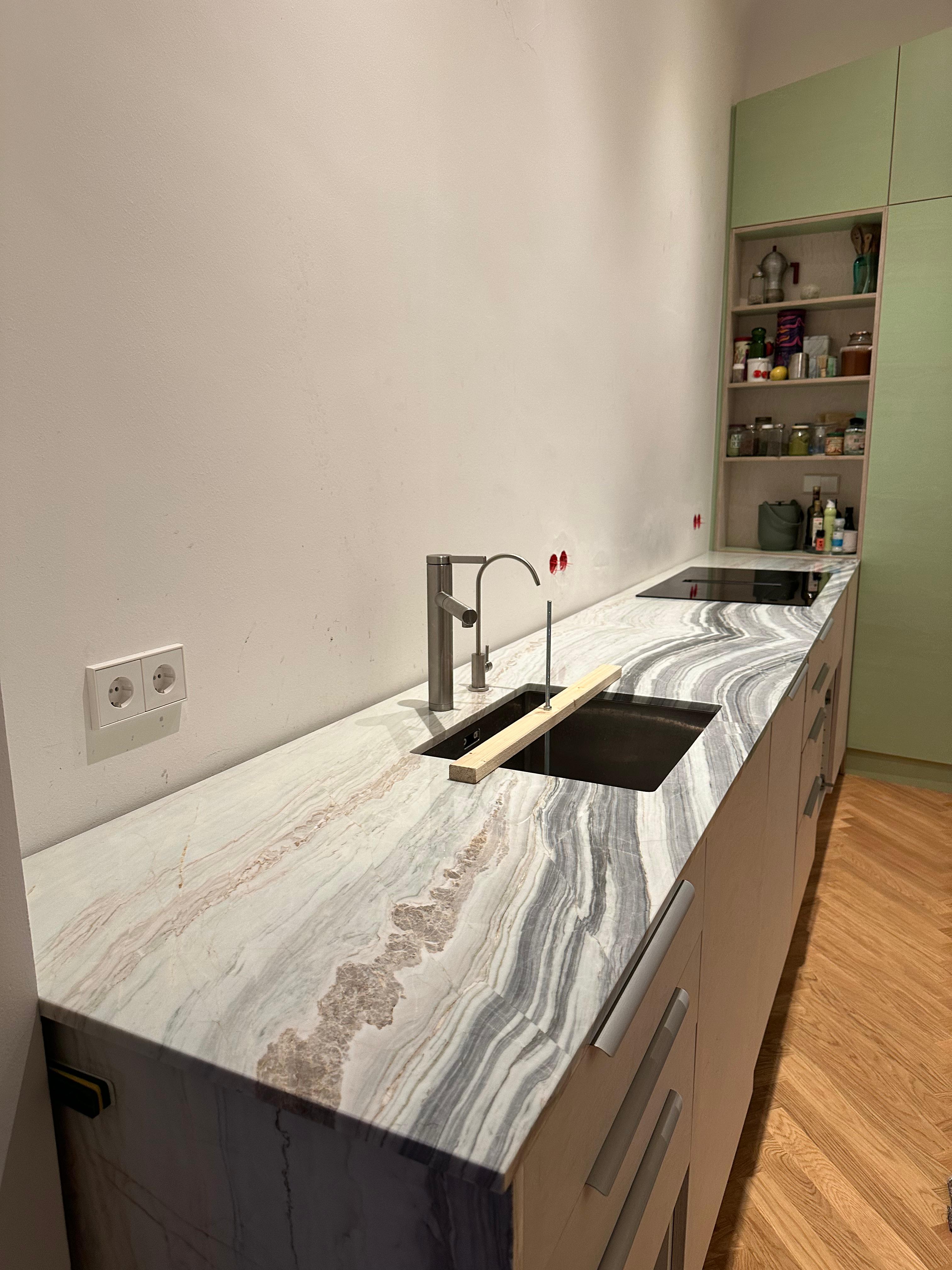
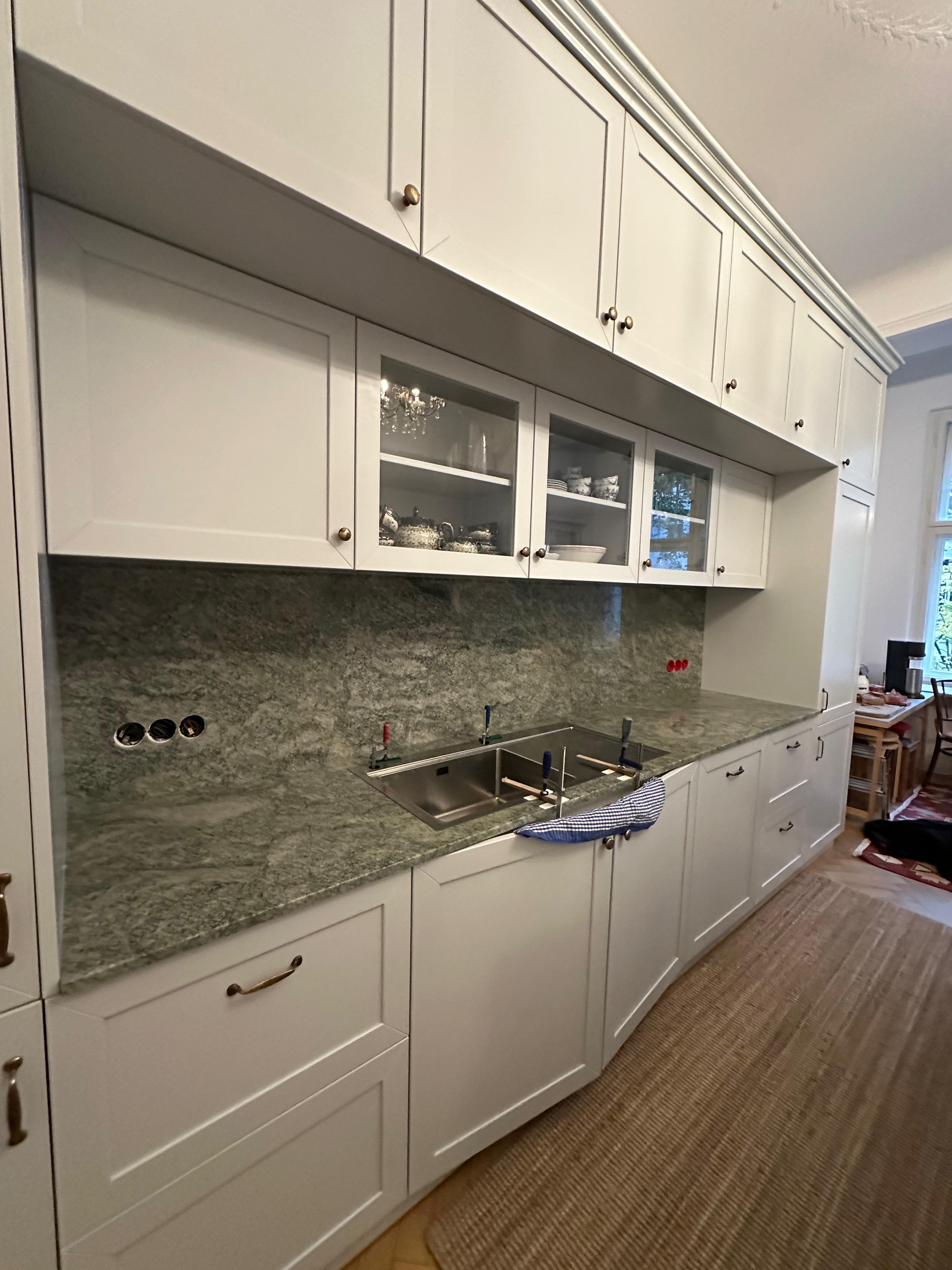
3. Kitchen Island as a Design Statement
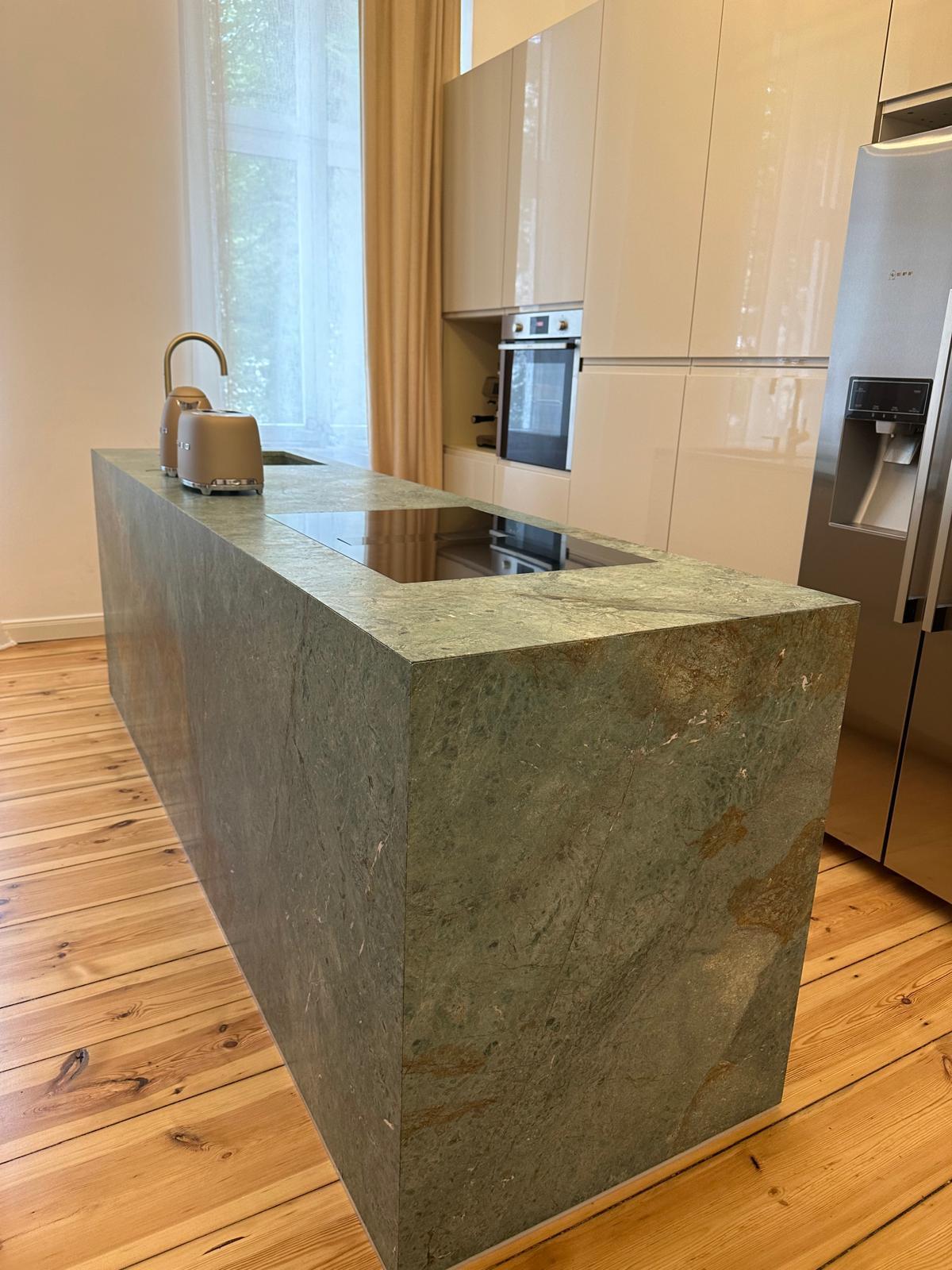
A kitchen island can be clad in natural stone on all visible sides, creating a striking, sculptural look, like a solid stone block at the centre of the kitchen.
We are happy to advise you individually on the ideal combination of natural stone and kitchen fronts, helping you bring your personal dream kitchen to life.
Natural Stone Backsplashes and Kitchen Islands: Large-Scale Design with Impact
Depending on the desired design, a kitchen island in natural stone can be planned to elevate the entire space and create a luxurious, architectural focal point. Kitchen islands are often clad in natural stone on three or four sides, resulting in a solid, high-end look. The edges can be finished with a mitred joint or with a clean, straight edge, depending on the preferred aesthetic.
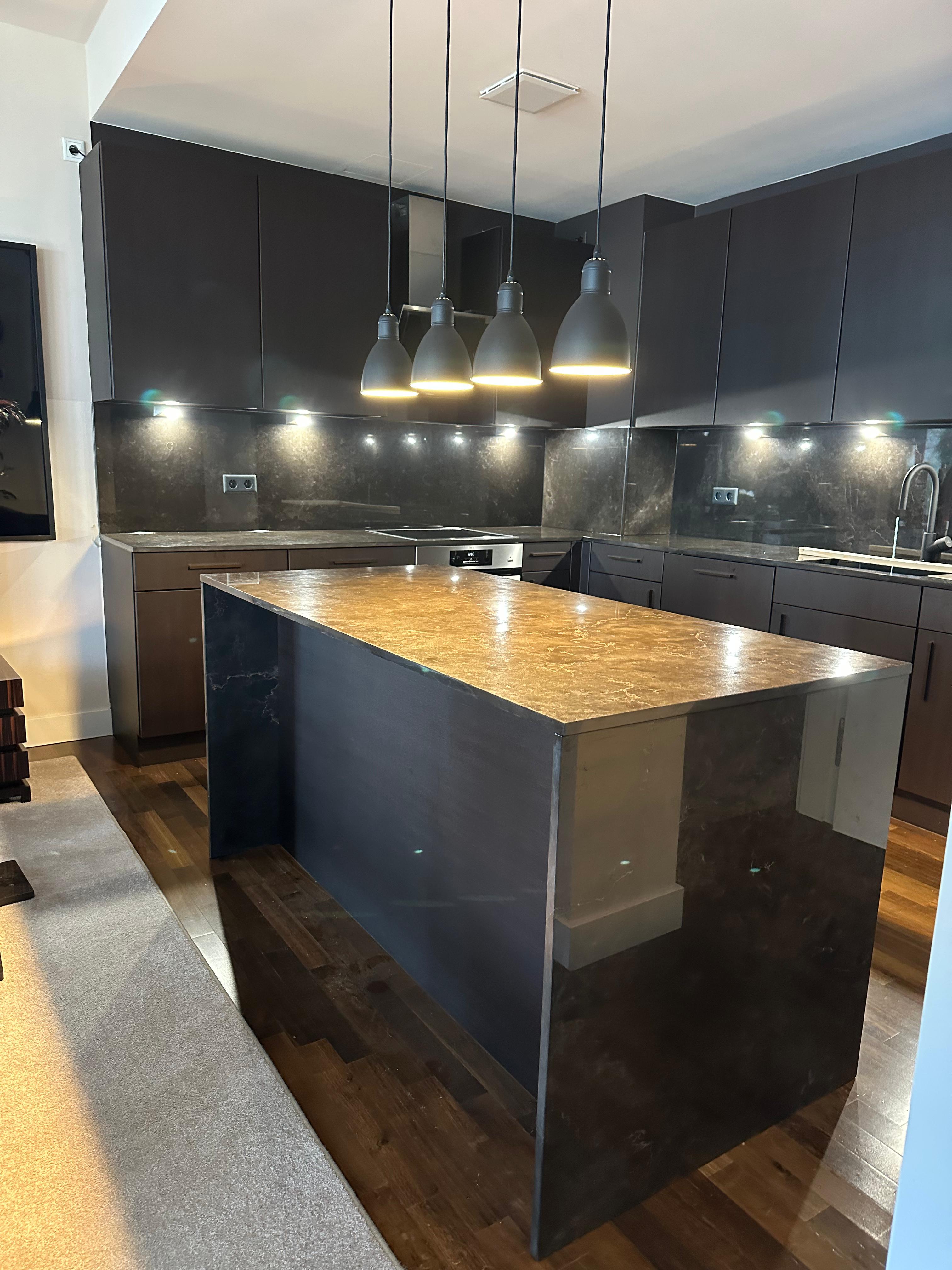
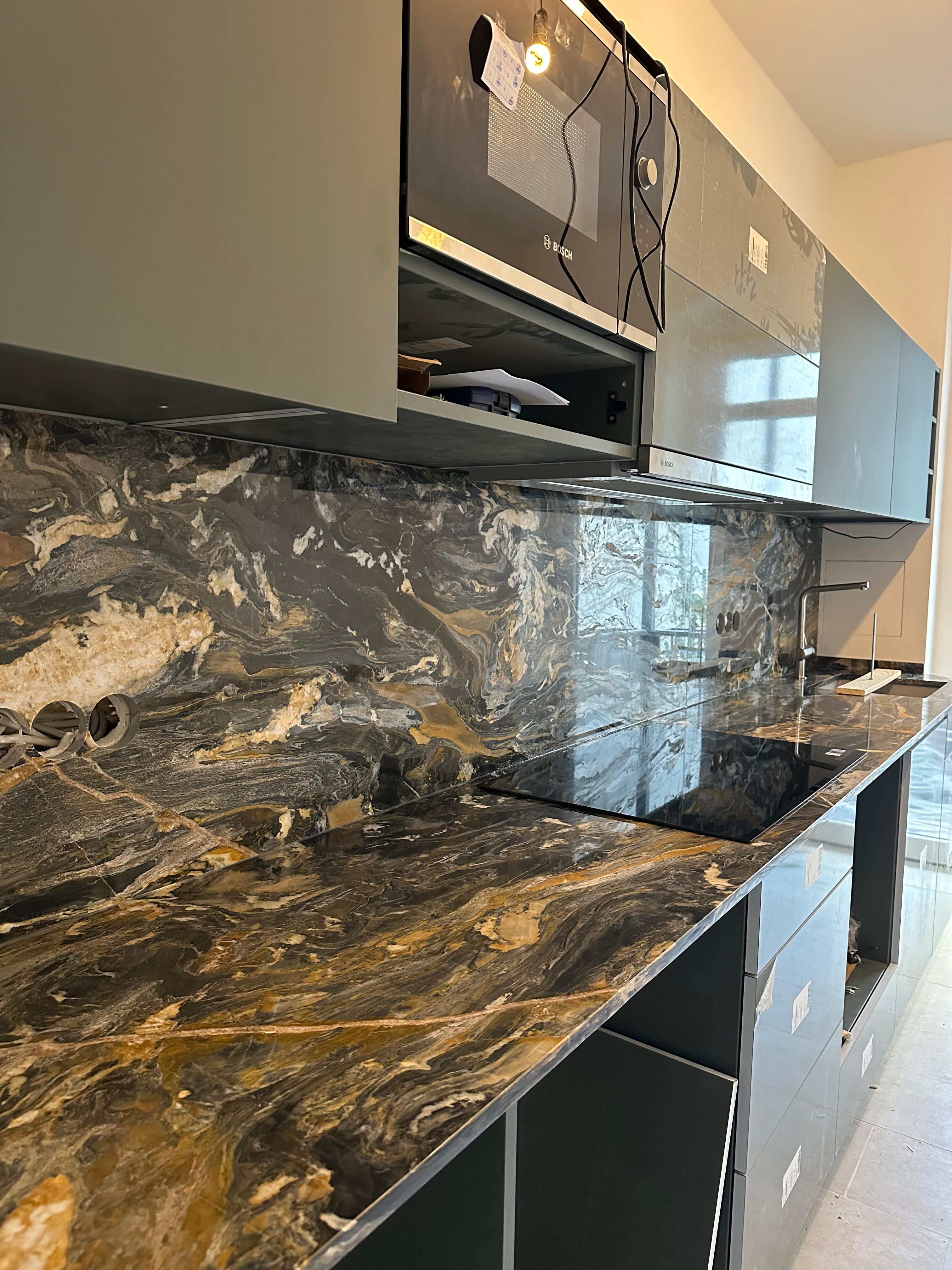
A natural stone backsplash also enhances the overall aesthetic while offering practical benefits. It effectively protects walls from splashes, stains, and moisture during cooking. In addition, natural stone is more durable and easier to maintain than conventional wall finishes.
FAQs About Natural Stone Kitchen Worktops
Which stone is the hardest and most scratch-resistant?
Which surface finishes are available (polished, matte, brushed)?
Which stone is best suited for families with intensive kitchen use?
How should I clean the surface properly in daily use?
Does the stone need to be regularly impregnated or sealed?
Matte or polished: which surface is easier to maintain?
Is the worktop made to exact measurements or adjusted on site?
Are there reference projects I can view?
Kitchen Worktops: A Key Decision When Planning Your Kitchen
The kitchen accompanies us throughout the entire day, from the first coffee in the morning to a glass of water in between, all the way to cooking and shared evenings with family and friends. As a result, the kitchen worktop is one of the most frequently used surfaces in the home, making factors such as hygiene, durability, and ease of maintenance essential.
A natural stone kitchen worktop combines high-end design with maximum functionality and longevity. Natural stones such as granite, which are particularly well suited for kitchen worktops, are extremely robust and resistant, even hot pots or pans can be placed on the surface without concern. Compared to materials like wood or ceramic, they offer significantly greater durability, making them the ideal choice for those who value quality, performance, and long-term use.
Best Natural Stones for Kitchen Worktops
Granite Worktops for Kitchens: Durable, Low-Maintenance and Built for Daily Use
We recommend granite as one of the best materials for kitchen worktops. Granite is an exceptionally hard natural stone that is highly scratch-resistant and extremely durable against external influences. It is resistant to acids -for example if a glass of wine is spilled- and also heat-resistant, allowing hot pots and pans to be placed on the surface without concern.
Granite also stands out for its ease of maintenance. Compared to materials such as wood, ceramic, or engineered stone, a granite worktop is significantly more durable and easier to care for. Thanks to its robustness, granite is ideal for everyday use and is particularly recommended for families with children or kitchens that see frequent, intensive use.
Marble Kitchen Worktops: Aesthetic Appeal, Individuality and Natural Patina
Marble as a kitchen worktop stands out for its refined appearance and distinctive, natural aesthetic. At the same time, compared to granite, marble is a more sensitive natural stone, particularly when it comes to acids and staining.
This means that everyday substances such as lemon, vinegar, or wine should be removed from the surface as quickly as possible, as they can otherwise penetrate the stone and leave visible marks. Many clients consciously choose marble for this very reason, embracing the natural patina that develops over time as part of the design – a reflection of individuality and lived experience.
Within our collection, we also offer particularly dense and durable marble types that are well suited for kitchen worktops, such as Dark Magenta(link) and Tortoise Green(link). For those looking to create a design-led kitchen with a luxurious feel, a marble worktop is a distinctive and elegant choice. While signs of use may appear more quickly in everyday life, they add depth, character, and a unique sense of authenticity to the surface
Travertine Kitchen Worktops: Natural Beauty and Warm Character
Travertine is a porous and relatively soft natural stone. If you choose travertine for your kitchen worktop, it is important to consider that liquids and food can penetrate its open pores. As a result, travertine worktops require more care and maintenance compared to other natural stones.
Travertine is also less resistant to heat and acids. For this reason, we primarily recommend it for applications with lower levels of wear. For a warm, Mediterranean look, travertine works particularly well in a filled and honed finish or as a kitchen backsplash, where it is exposed to less daily stress than the worktop surface.
Choosing the Right Natural Stone Slab
Even within the same type of stone, there can be significant variations. Factors such as origin, the individual block, and the processing method all have a strong influence on colour, veining, and structure. Every natural stone slab is one of a kind – shaped over millions of years, each piece tells its own story.
If you choose a granite worktop, for example, you benefit from excellent heat resistance, acid resistance, and scratch durability. Within our exclusive collection, you will find a wide range of distinctive granites, including green varieties such as Costa Smeralda, Verde Picasso, and Verde Borgogna, which are ideal for modern and elegant kitchens. We also offer classic options like Nero Assoluto and Chaotic Black, perfectly suited to timeless, minimalist designs.
In the marble category, we offer selected denser and more durable varieties that are well suited for kitchen worktops, such as Dark Magenta and Tortoise Green. In addition, our collection includes classic white, black, and other marble types that can be chosen depending on usage and design preferences.
As each slab is unique, we recommend selecting your stone in person before making a final decision. In our Berlin showroom, we present a curated selection of samples and provide individual consultation. You also have the opportunity to visit our warehouse and choose your preferred slab directly on site.
How Surface Finishing Transforms Natural Stone into a Long-Lasting Kitchen Worktop
Comparing Surface Finishes for Kitchen Worktops
Choosing the right surface finish plays a crucial role in the appearance, feel, and maintenance of a natural stone kitchen worktop. In general, the main distinction is between polished and honed (also referred to as matte) finishes.
A polished surface is smooth, glossy, and particularly easy to maintain. Dirt and residues can be removed quickly and effortlessly with a cloth, as liquids are less likely to adhere to the surface. However, fingerprints, dust, and water marks tend to be more visible, especially on darker stones.
A honed or matte surface offers a more natural look and a soft, velvety feel. It enhances the original character of the natural stone and is often preferred for modern, minimal kitchen designs. In everyday use, fingerprints and light marks are less noticeable, although cleaning can be slightly more demanding due to the more open surface structure.
Ultimately, the choice between polished and honed finishes depends not only on the desired design but also on your expectations in terms of maintenance and everyday use.
Kitchen Worktop Design: Edge Options and Bespoke Details
Beyond the choice of material, the edge profile plays a key role in the overall look of a kitchen worktop. It has a strong influence on the style – from classic to modern – and offers a variety of possibilities for individual design.
1. Polished Edge
In this classic finish, the visible edge of the natural stone slab, typically 2 cm thick, is polished by hand. The result is a clean, elegant look that feels timeless and integrates beautifully into almost any kitchen design.
2. Rounded Edge
Here, the visible edge is softly rounded and then polished. This option creates a softer, more modern appearance and contributes to a minimal, harmonious overall aesthetic. It is also especially pleasant and practical for everyday use.
3. Mitred Edge (mitre-joined finish)
For a particularly substantial and high-end look, an additional fascia can be produced in the desired height and joined to the worktop using a mitred edge. This creates the appearance of a much thicker slab, even though the actual stone thickness may only be 2 cm – ideal for an exclusive, architectural finish.
We advise our clients in detail on every design decision – from selecting the right stone to choosing details such as the edge profile – and guide you step by step towards your individual dream kitchen.
Planning and Installation of Natural Stone Kitchen Worktops
When planning and installing a natural stone kitchen worktop, there are several important aspects to consider. Natural stone is a premium material, but it is also heavy, which means weight plays a key role – particularly in older buildings where structural conditions must be taken into account.
Another important factor is the layout of the kitchen, as it directly influences the design and planning of the worktop. The most common kitchen layouts include:
Single-wall kitchen (one-wall layout)
L-shaped kitchen (corner layout)
U-shaped kitchen
G-shaped kitchen (U-shape with peninsula or bar)
Kitchen with island
Each of these kitchen layouts comes with different requirements in terms of custom fabrication, cutting, and installation of the natural stone worktop.
We plan every kitchen project individually, tailoring both the material and the execution precisely to our clients’ needs and spatial conditions—resulting in a perfect balance of design, functionality, and long-lasting quality.
Custom-Made Kitchen Worktops: Fabrication and Preparation
When planning a kitchen, professional execution and precision are essential to achieve a perfect result. That is why every project begins with a personal consultation in our Berlin showroom. There, we take the time to fully understand our clients’ needs and preferences, and to select the most suitable natural stone for their intended use.
The next step is an on-site measurement appointment. Our installation team assesses the space, identifies any potential challenges, and takes precise, millimetre-accurate measurements of the kitchen. Having the same team handle both the measurement and the installation ensures the highest level of precision and a seamless process.
After the measurement, all details are reviewed internally and adjusted if necessary. Once the project is confirmed, production of the kitchen worktop begins in our own workshop in Germany. Our experienced stonemasons, who have worked with natural stone for decades, craft each piece with the utmost care. The worktop is fabricated with millimetre precision based on the technical drawings created by our installation team following the on-site measurement.
Once production is complete, we contact you to schedule the installation. On the day of installation, our team manages the entire process, from delivery to professional fitting. Naturally, we leave the site clean, so you can immediately enjoy your new kitchen worktop.
Construction Requirements and Technical Aspects
When planning a natural stone kitchen worktop, a stable and properly constructed substructure is essential. This can consist of standard kitchen cabinets or custom-built solutions by a carpenter. The key requirement is that the substructure can reliably support the weight of the natural stone worktop.
Our natural stone slabs typically have a standard thickness of 2 cm. This provides an optimal balance between stability, durability, and overall weight, making it ideal for use in the kitchen.
Integrating Sinks and Kitchen Appliances into Your Worktop
When integrating a sink into a natural stone kitchen worktop, there are several options to choose from. The decision primarily depends on the desired design and the overall aesthetic of the kitchen.
1. Undermount Sink
The sink is installed beneath the worktop, creating a particularly elegant and seamless look. It also makes cleaning easier, as there are no edges on the surface.
2. Top-Mounted Sink
In this case, the sink sits on top of the worktop. This option is functional and classic, although the transition between sink and surface remains visible.
3. Flush-Mounted Sink
The sink is integrated perfectly flush with the worktop. The result is a modern, clean appearance with smooth, continuous transitions.
Once you have chosen your preferred option, all details will be discussed during the on-site measurement appointment with our installation team. Early coordination is essential to ensure that the kitchen worktop is precisely planned and fabricated from the very beginning.
Production and Installation Process
The production of a natural stone kitchen worktop typically takes between 1 and 3 weeks, depending on the size and complexity of the project.
Installation is then carried out quickly and efficiently. Depending on the scope of the worktop and the stage of the project, fitting is usually completed within a single day.
From the initial consultation onwards, our team takes care of the entire process; from planning and production to installation. We handle every step, ensuring your kitchen worktop is perfectly installed in your home, so you can simply enjoy the finished result.
Care and Everyday Use: How to Keep Your Natural Stone Kitchen Worktop Beautiful for Years
Everyday Cleaning and Care for Natural Stone Worktops
For daily cleaning of a natural stone kitchen worktop, choosing the right cloth is essential. We recommend using soft materials such as a cotton or microfibre cloth to clean the surface gently and effectively.
Our natural stone slabs are professionally impregnated in our facility before installation. This treatment provides long-lasting protection against stains and acids while making everyday maintenance easier. Typically, the impregnation lasts around 3 to 4 years, although it can be renewed earlier if needed, especially for marble worktops.
For everyday cleaning, we recommend using specialised natural stone cleaning products, such as those from Litofin, which are also available through us. They ensure gentle care and help preserve the natural beauty of the stone for many years.
Stains, Limescale and Everyday Kitchen Use: How to Keep Your Worktop Looking Beautiful
In everyday kitchen use, stains and limescale can build up quickly. For a particularly low-maintenance solution, we recommend durable natural stones such as granite. Granite is highly resistant to stains and easy to clean on a daily basis, even grease or acidic substances can usually be removed without leaving permanent marks.
With marble kitchen worktops, it is important to note that the material is more sensitive to grease, acids, and limescale compared to granite. Stains can penetrate the surface more easily, which is why mindful use in everyday life is essential.
We discuss all of these aspects in detail during a personal consultation in our showroom. This allows us to select the most suitable natural stone together, tailored to your priorities in design, functionality, and maintenance.
Although our worktops are professionally impregnated to provide additional protection, careful use in daily life remains important to preserve the natural beauty of the stone over the long term.
Sealing and Long-Term Maintenance of Natural Stone Worktops
All kitchen worktops are professionally impregnated in our production facility before installation, with the highest level of precision. This treatment significantly increases the surface’s resistance to stains and everyday wear.
We recommend renewing the impregnation approximately every 3 to 4 years. We are happy to advise you on how this can be done easily and effectively.
For marble worktops or kitchens with intensive use - such as frequent cooking with sauces, lemons, or wine - it may be beneficial to reapply the impregnation more regularly, for example every 6 to 12 months. This ensures that your natural stone worktop remains well protected and retains its beauty over the long term.
Design und Kombinationen: Naturstein harmonisch integrieren
Natural Stone Worktops in Combination with Kitchen Fronts
We offer a wide range of natural stones that can be harmoniously combined with a variety of kitchen fronts. The right balance of material, colour, and texture plays a key role in the overall look of the kitchen.
Here are some proven combinations from our projects:
1. Dark Wood Fronts
Dark wood cabinetry pairs beautifully with deep green granite worktops such as Costa Smeralda or Verde Picasso, as well as with light marble varieties that create an elegant contrast.
2. Light Wood Fronts
For light wood cabinetry, we recommend light-coloured granite worktops or white marble varieties that enhance the natural lightness and elegance of the design.
3. Kitchen Island as a Design Statement
A kitchen island can be clad in natural stone on all visible sides, creating a striking, sculptural look, like a solid stone block at the centre of the kitchen.
We are happy to advise you individually on the ideal combination of natural stone and kitchen fronts, helping you bring your personal dream kitchen to life.
Natural Stone Backsplashes and Kitchen Islands: Large-Scale Design with Impact
Depending on the desired design, a kitchen island in natural stone can be planned to elevate the entire space and create a luxurious, architectural focal point. Kitchen islands are often clad in natural stone on three or four sides, resulting in a solid, high-end look. The edges can be finished with a mitred joint or with a clean, straight edge, depending on the preferred aesthetic.
A natural stone backsplash also enhances the overall aesthetic while offering practical benefits. It effectively protects walls from splashes, stains, and moisture during cooking. In addition, natural stone is more durable and easier to maintain than conventional wall finishes.
